 blog
Best Organic Fertilizers for Clay Soil in 2026
Last Updated: November 24, 2026
Quick Summary
The best organic fertilizers for clay soil in 2026 are slow-release granular blends and composted materials that feed plants while improving soil structure. Compost and aged manure do the structural work, while granular blends and liquids supply nutrients. Clay usually needs both amendments and fertilizer, so test your soil first.
- Spread two to four inches of compost over the surface and work it into the top several inches each season.
- Apply granular organic blends in two passes at right angles and water in with about a quarter inch.
- Dilute fish emulsion at the label rate, commonly one to two tablespoons per gallon.
- Granular products go down every six to eight weeks; compost each season; liquid every two to four weeks.
- Test for pH, phosphorus, potassium, and organic matter before choosing a fertilizer.
Table of Contents
- What Are the Best Organic Fertilizers for Clay Soil in 2026?
- How to Improve Clay Soil Naturally
- The Best Compost for Clay Soil
- How to Break Down Clay Soil Fast
- Why a Soil Test for Clay Soil Comes First
- Fertilizer vs. Soil Amendment: What Clay Soil Actually Needs
- How to Apply Organic Fertilizer to Clay Soil
- Request a Free Estimate for Clay Soil Improvement
- Frequently Asked Questions
What Are the Best Organic Fertilizers for Clay Soil in 2026?
The best organic fertilizers for clay soil in 2026 are slow-release granular blends and composted materials that feed plants while improving soil structure. The product matters less than what it does to the soil around it.
Clay particles pack tightly and hold water and nutrients well, but they leave little room for air or roots. Organic matter loosens that structure over time. A 2025 review in a peer-reviewed soil health study found that long-term organic fertilizer use can raise soil organic matter and improve soil aggregate properties, which is exactly what dense clay needs.
Before the shortlist, one distinction matters more than any product pick: fertilizer feeds plants, while amendments like compost change the soil itself. Clay soil usually needs both, and no bag of fertilizer will fix compaction on its own. The table below separates the two so you can see which products primarily feed and which primarily build structure.
| Product | Nutrient Analysis (N-P-K) | Release Speed | Improves Structure? | Best Use on Clay |
|---|---|---|---|---|
| Compost (plant-based blend) | Roughly 0.5-1-1, varies by source | Slow | Yes, strongly | Overall soil building; topdress or work into beds |
| Aged manure | Roughly 0.5-0.5-0.5 to 1-1-1 | Slow | Yes | Lawn and beds; must be fully aged |
| Worm castings | Roughly 1-0-0, trace minerals | Gentle | Mildly | Seedlings, containers, light topdressing |
| Fish emulsion | Commonly 5-1-1 or 2-3-1 | Fast | No | Quick greening; supplemental feeding |
| Granular organic blend (feather meal, bone meal, alfalfa) | Commonly 4-4-4 to 8-2-4 | Slow | Mildly | Full lawn coverage; seasonal feeding |
| Humic acid | Concentrated; not a primary N-P-K source | Fast | Mildly | Compacted spots; chelates nutrients |
How we ranked them for clay. We weighed five criteria: nutrient analysis and ingredient sources (plant, animal, or mineral), release speed relative to clay's slow drainage, coverage per bag so price per area is comparable, whether the product contributes organic matter or only nutrients, and suitability for clay specifically rather than sandy or loam soils. A product that feeds fast but adds nothing to structure ranks lower here, because clay's core problem is physical, not just nutritional.
What to expect on price. Pricing depends on product, quantity, and delivery, so compare products on cost per 1,000 square feet at the label rate rather than on bag price alone. For current prices or a quote, visit the QEN Landscaping website.
Match the product to the job. For lawns, a slow-release granular organic blend applied at the label rate gives even feeding and a mild structure benefit. For vegetable and ornamental beds, compost and aged manure do the structural work while a lighter granular or liquid product supplies nutrients. For containers and seedlings, worm castings and diluted fish emulsion are gentler and easier to control. No single product tops every list, which is why the shortlist is organized by use rather than by brand.
Below, we break down how to apply each form, how to read a soil test before buying, and where most homeowners go wrong.
How to Improve Clay Soil Naturally
Improving clay soil naturally means adding decomposed organic matter in layers and letting soil life do the mixing. Compost, leaf mold, and aged manure are the workhorses here.
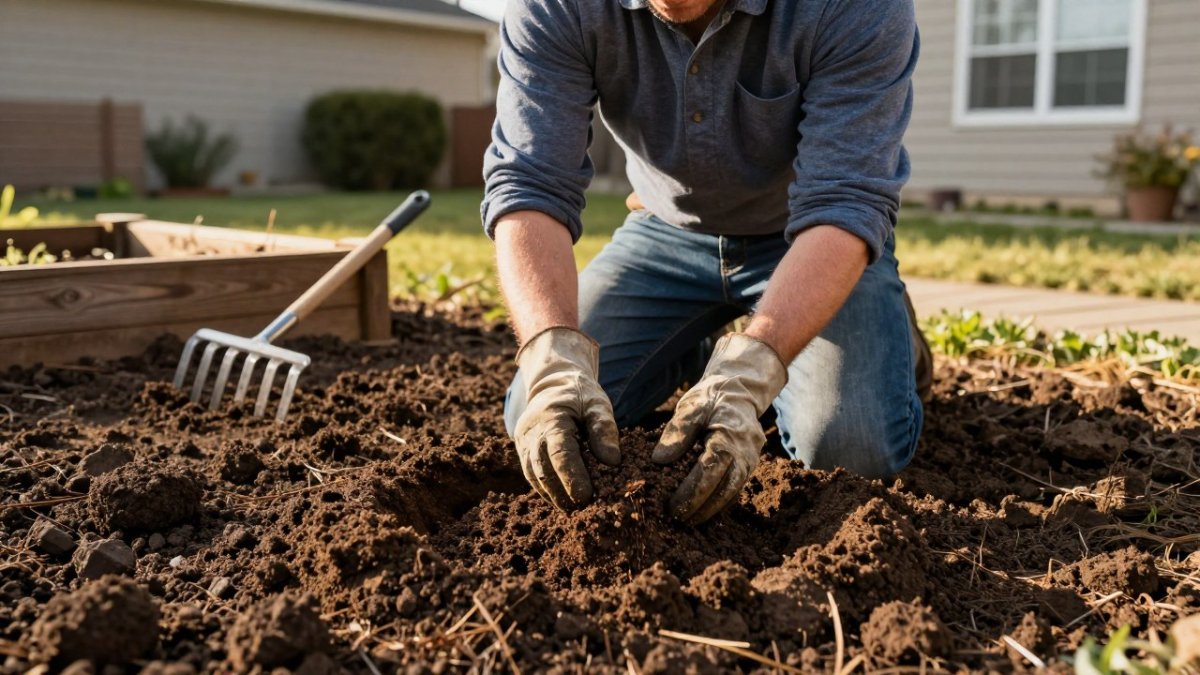
Spread two to four inches of compost over the surface and work it into the top several inches. Repeat each season. Earthworms and microbes break it down further, and their activity opens channels for air and water.
- Test drainage with a simple hole-and-water check
- Add compost in fall or early spring
- Keep a mulch layer to protect structure
- Avoid tilling wet clay, which smears it
Watch out: working clay while it's saturated can compact it worse than before. Wait until soil crumbles in your hand rather than forming a ribbon. If water already pools in your yard, our guide on how to fix standing water walks through the drainage side of the problem.
The Best Compost for Clay Soil
The best compost for clay soil is a mature, well-decomposed blend with a mix of plant and animal sources. Leaf compost and composted manure both work, and a blend often beats a single ingredient.
Look for dark color, an earthy smell, and no recognizable food scraps. Immature compost ties up nitrogen as it finishes breaking down, which starves plants right when they need feeding.
Leaf compost adds fungal life that helps bind clay particles into crumbs. Composted manure brings both nutrients and organic bulk. Grass clippings work in thin layers but mat down if piled thick.
How to Break Down Clay Soil Fast
Breaking down clay soil fast relies on aeration, organic matter, and moisture control, not chemical shortcuts. Gypsum gets recommended constantly, and we'd push back on that.
Gypsum is often touted for breaking up compact clay, but the evidence for general use is thin. It helps in specific sodic soil conditions, not as a blanket fix. Spend your effort on compost and aeration instead.
Core aeration pulls plugs from the lawn and opens the surface. Follow with compost topdressing so material washes into the holes. Liquid organic products can deliver nutrients without adding more compaction pressure, which matters on heavy ground.
Loosening clay does raise erosion risk. Our steps to prevent soil erosion in your yard cover how to protect bare, amended ground.
Why a Soil Test for Clay Soil Comes First
A soil test for clay soil comes first because clay holds nutrients differently than sandy ground, and guessing leads to waste. Choose fertilizers that supply the nutrients your soil test identifies as needed, rather than assuming one product suits every clay yard.
Test for pH, phosphorus, potassium, and organic matter. Soil pH controls how much of each nutrient plants can reach.
A basic test kit or extension office test gives you numbers to work from. Without them, you're fertilizing blind.
Fertilizer vs. Soil Amendment: What Clay Soil Actually Needs
Fertilizer feeds plants; a soil amendment changes the soil itself. Clay soil usually needs both, but the amendment does more long-term work.
Fertilizers, organic or not, deliver nitrogen, phosphorus, and potassium. Amendments like compost, peat moss, and aged bark alter texture, drainage, and water retention. Some amendments, such as manures and fish products, also supply nutrients and can double as fertilizer.
For clay, start with amendments to fix structure, then add fertilizer to meet plant needs. If you're weighing sustainable inputs over synthetic ones, our article on sustainable lawn care alternatives covers the trade-offs.
How to Apply Organic Fertilizer to Clay Soil
Applying organic fertilizer to clay soil works best when you spread it evenly, water it in, and repeat on a schedule tied to the growing season and the product's release speed. Clay drains slowly, so nutrients sit in the root zone longer than they would in sand, which means overapplication is easier to do and harder to undo.
Granular organic blends. Set the spreader to the label rate for your lawn size and apply in two passes at right angles so coverage is even. Water in with about a quarter inch to move granules off the blades and into the soil. Organic granular products feed for varying periods depending on the product, so follow the label for application frequency. Do not apply to frozen ground or before a heavy rain forecast.
Compost and aged manure. Spread compost over the surface and work it into the top several inches of beds, or topdress lawns after core aeration. Repeat each season, as soil structure improves gradually.
Liquid products (fish emulsion, liquid humic acid). Dilute at the label rate, commonly one to two tablespoons per gallon for fish emulsion, and spray or water in. Liquid feeding is supplemental on clay: it delivers quick nutrients but adds no structure, so pair it with compost rather than relying on it alone.
Worm castings. Apply a quarter to half inch as a topdressing on beds or blend into potting mix for containers. Castings are generally gentle enough for seedlings, but they are not a substitute for structural amendment in garden beds.
- Timing: early spring and early fall for granular and compost; liquid as needed during active growth
- Rate: follow the bag or label for your area; more is not better on clay
- Watering: water after application to move nutrients into the root zone, but avoid runoff
- Frequency: granular every six to eight weeks; compost each season; liquid every two to four weeks
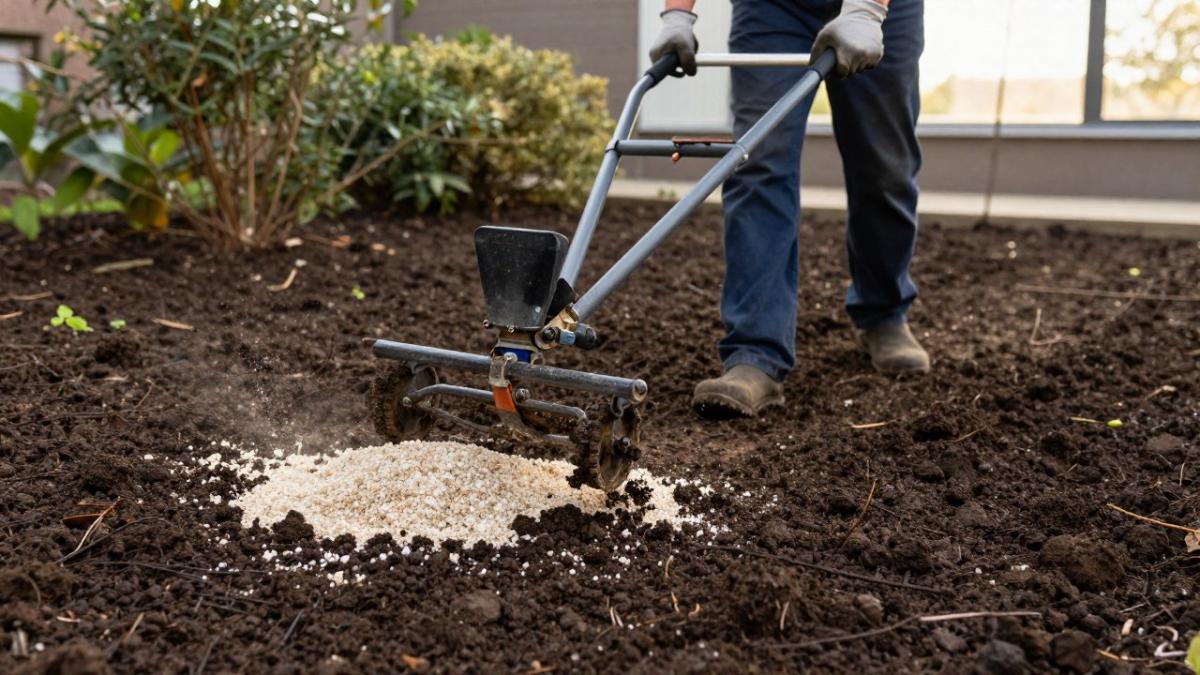
Adjust for what you're feeding. Lawns want the granular schedule above. Vegetable beds benefit from compost worked in before planting plus a mid-season granular or liquid feeding. Ornamental beds and containers do better with lighter, more frequent feeding, castings or diluted liquid, because their root volume is smaller and burn risk is higher.
Watch out: overapplying nitrogen-heavy organics on clay can burn grass or push lush growth that disease loves, and because clay holds nutrients, the excess lingers. If grass yellows after feeding, our fixes for yellow grass after fertilizing explain what went wrong.
Request a Free Estimate for Clay Soil Improvement
Fixing clay soil is a multi-season job, and doing it right takes the guesswork out of product choice, timing, and drainage. QEN Landscaping has spent over 15 years tailoring landscaping solutions for residential and commercial properties, using top-quality materials and staying in constant communication until the job is done.
A soil, drainage, and lawn-goal assessment is a common starting point for a plan built around what your ground needs. Our team can help with soil amendment and ongoing maintenance.
Request a free estimate from QEN Landscaping to discuss your clay soil. Our landscape maintenance services for homeowners guide shows what ongoing care looks like.
Clay soil will test your patience, but the right organic program, applied on schedule, changes it season by season. QEN Landscaping brings over 15 years of experience, customized solutions, and a single point of contact from first visit to final walkthrough. Request a free estimate and get a plan built for your soil.
Frequently Asked Questions
Can organic fertilizer break down clay soil?
Organic fertilizer feeds soil life, and that biology does part of the work. Microbes and earthworms break down composted manure, leaf mold, and humates, which builds aggregates and loosens tight clay over time. It is not instant. Expect two to three growing seasons of regular application before drainage and tilth improve noticeably. Pair fertilizer with compost and avoid tilling wet clay, which smears the structure further.
Is compost or manure better for clay soil?
Both help, but compost is the safer default for clay soil. Finished compost adds stable organic matter, improves water retention and drainage, and will not burn roots. Composted manure works well too, though fresh manure can carry salts and weed seed, so it needs aging first. Poultry and feather meal products can be high in nitrogen, so use them at measured rates rather than piling them on.
Should you fertilize clay soil before or after a soil test?
Test first. A soil test for clay soil tells you pH, phosphorus, potassium, and organic matter levels, so you buy only what the ground actually lacks. Choose materials that supply the nutrients identified as needed rather than assuming one product fits every yard. Skip a phosphorus-heavy blend if your test already shows adequate levels, and adjust pH with lime or sulfur only when the report calls for it.
How often should you add organic matter to clay soil?
Apply compost or aged manure in spring and fall, following the product label for rates. Fertilizer rates follow the label and your soil test. Long-term organic applications have been linked to higher soil organic matter and better aggregate stability, but the gains come from repeat applications across seasons, not a single heavy dose.