 How-to
7 Steps to Prevent Soil Erosion in Your Yard
Last Updated: October 25, 2026
Quick Summary
To prevent soil erosion in your yard, first diagnose the cause, usually poor drainage, then fix drainage so water leaves safely and slow it down on slopes. Cover bare soil immediately with mulch or deep-rooted plants, and add terraces or retaining walls where slopes are steep.
- Extend downspout outlets so roof water lands at least 4-6 feet from the foundation.
- The ground should slope away from the foundation at roughly a 6-inch drop over the first 10 feet.
- On gentle slopes under about 10% with mild erosion, vegetation and mulch are usually enough.
- Apply mulch in a 2-3 inch layer, never piled against trunks.
- A retaining wall built without drainage is the most common failure and can lean or collapse within a few seasons.
Table of Contents
- Step 1: Diagnose Why Your Yard Is Eroding
- Step 2: Fix Yard Drainage Solutions So Water Leaves Safely
- Step 3: Learn How to Stop Erosion on a Slope
- Step 4: Choose Plants to Prevent Soil Erosion
- Step 5: Does Mulch Stop Soil Erosion, or Do You Need More?
- Step 6: Build Terraces and Retaining Walls Where Slopes Are Steep
- Step 7: Maintain and Monitor Your Erosion Control Year-Round
- Get a Free Erosion Assessment from QEN Landscaping
- Frequently Asked Questions
Step 1: Diagnose Why Your Yard Is Eroding
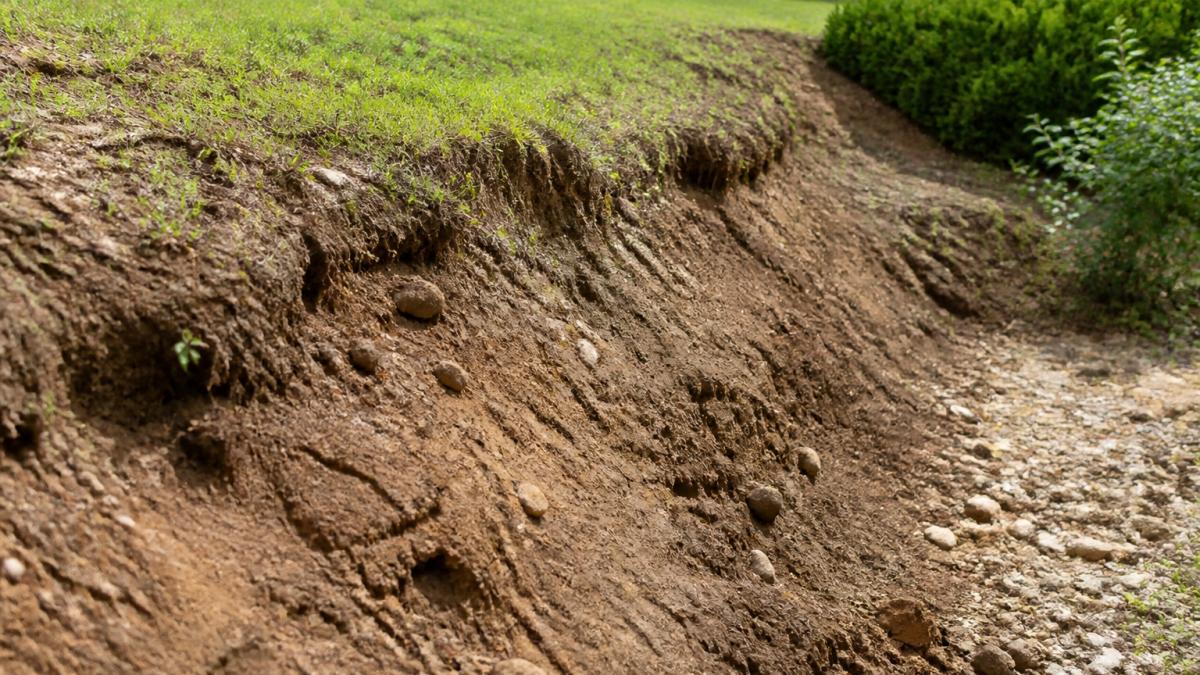
Soil erosion in your yard rarely starts as a dramatic washout. It usually begins with small clues: a thinning patch of grass, a shallow channel forming after storms, or soil piled up against the foundation. At QEN Landscaping, we tell homeowners the same thing every time: find the cause before you buy a single bag of mulch.
The most common driver is poor drainage. Water that cannot soak in or flow away will carve its own path.
Signs That Point to Poor Drainage
- Water pooling in the same spot after every rain
- Soil stains on siding or mud splashed on basement walls
- A visible channel or gully cutting across the lawn
Rating Erosion Severity Before You Fix Anything
Grade the problem honestly. Mild means bare spots and slight surface movement. Moderate means visible gullies under a few inches deep and exposed soil on slopes. Severe means deep channels, exposed roots, or soil loss near structures. Severe cases often need a professional assessment before any DIY fix.
Step 2: Fix Yard Drainage Solutions So Water Leaves Safely
Water needs a controlled, legal exit. If it has nowhere to go, any fix you install will fail the next time it rains hard. The goal is not to move water faster off your property, it is to slow it, spread it, and let it soak in or discharge to a safe outlet without shifting the problem downhill or next door.
Inspect the Whole Path Before You Buy Anything
Walk the property during a steady rain and again right after. Trace water from roof to gutter to downspout to grade to the lowest point of the yard. Note where it enters, where it slows, where it ponds, and where it leaves. Then check the system in this order:
- Gutters and downspouts: confirm gutters are clear and pitched toward the outlets. A downspout that dumps within a foot of the foundation is a leading cause of wet basements and foundation staining.
- Downspout discharge: extend outlets so roof water lands at least 4-6 feet from the foundation and onto a splash block or gravel apron, not bare soil.
- Grade: the ground should slope away from the foundation at roughly a 6-inch drop over the first 10 feet. Low or flat spots against the house hold water and should be regraded.
Match the Fix to the Flow
- Grading: regrade to slope away from the foundation at the pitch above. This is the cheapest fix and the first one to try when water ponds against the house.
- Diversions (swales and berms): shallow, broad, vegetated channels that steer surface water around a structure or to a safe outlet. Keep side slopes gentle so they do not erode.
- Dry creek beds: gravel-lined channels for steady low-volume flow. Line the channel with filter fabric and rounded stone so water moves without scouring soil.
The EPA guidance on managing stormwater at home explains why letting runoff soak in or slow down beats piping it straight to the street.
Redirecting Runoff Without Flooding Your Neighbor
Never dump water onto a neighbor's property. It creates disputes and may violate local drainage rules. Instead, direct flow toward a storm sewer inlet, a rain garden, or a level spreader that releases water slowly. Check your municipal rules before you change any grade near a property line, and keep the outlet on your own property or a public drainage easement.
Size and Slope Matter
Most drainage fixes fail because they are undersized or flat. A French drain needs a continuous slope to its outlet, and a swale needs enough capacity for the heaviest storm it will see. If you are unsure of the volume, a professional can measure the contributing roof and yard area and size the system accordingly. For a broader look at how drainage fits into a yard plan, see our guide to landscape design for small residential yards.
Step 3: Learn How to Stop Erosion on a Slope
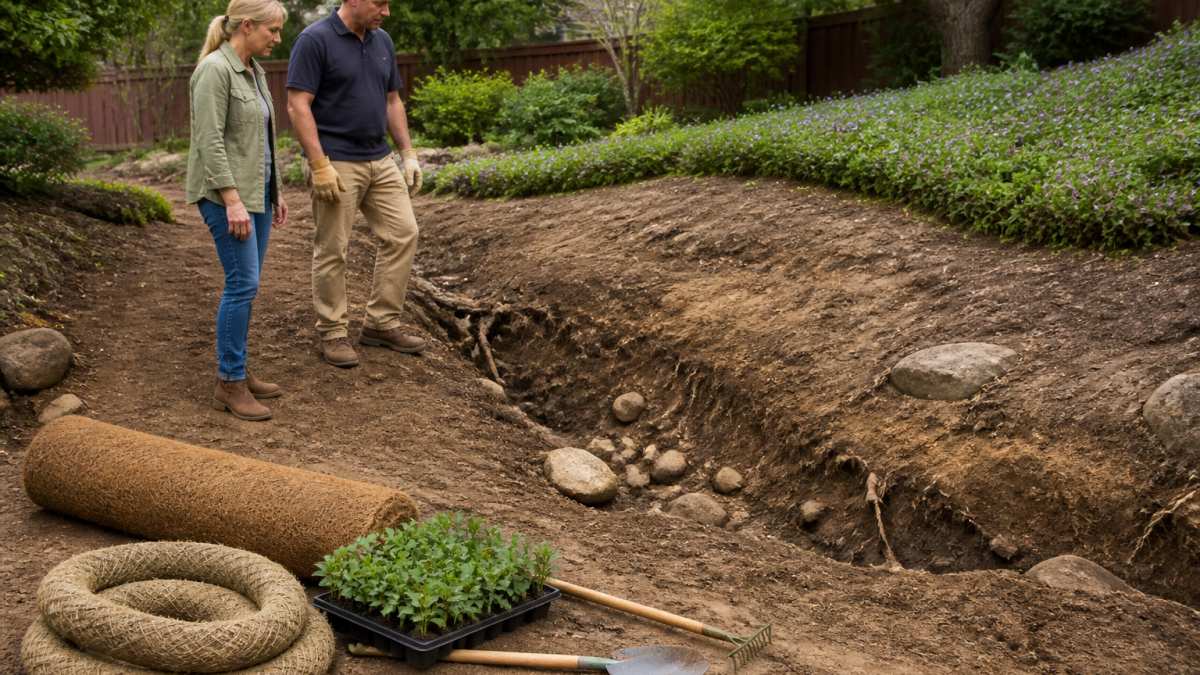
Slopes fail because water moves fast across them. Slow the water, and the soil stays put. The fix is a combination of cover, structure, and short flow paths, but which combination you need depends on how steep the slope is, what the soil is made of, and how bad the erosion already is.
Match the Fix to the Slope, Soil, and Severity
Use this decision guide before you buy materials:
- Gentle slope (under about 10%) with mild erosion: vegetation and mulch are usually enough. Establish a dense groundcover and keep bare soil covered.
- Moderate slope (roughly 10-25%) with visible gullies: combine vegetation with erosion-control blankets or geotextiles, and break up long flow paths with contouring or shallow terraces.
- Steep slope (over about 25%) or severe erosion (deep channels, exposed roots, soil loss near structures): structural fixes, terraces, retaining walls, or engineered stabilization, may be needed, and a professional assessment is wise before you spend on materials.
Cover Bare Soil Immediately
Bare soil is the enemy. Cover it with mulch or vegetation right away, even if the permanent planting is weeks away. On steep, raw ground, install erosion-control blankets or geotextiles: seed or plant first, then anchor the blanket over the surface so it holds soil and moisture while roots establish. Anchor blankets in a shallow trench at the top and stake them across the face so water cannot get underneath.
Break Up Long Slopes
Long, uninterrupted slopes accelerate water. Add contouring or shallow terraces to break a long slope into shorter, flatter steps. Build terraces on the contour so water spreads across the slope instead of channeling down it. Keep the terrace outlets stable with stone or vegetation so they do not become new gullies.
Use Sandbags and Stone Only as Short-Term Protection
A common mistake is stacking sandbags on a hillside and calling it done. Sandbags rot and fail. They buy time, not a solution. Use them only as emergency protection while you plan and install a permanent fix.
When to Call a Professional
If a slope shows deep gullies, exposed roots, soil loss near a foundation or retaining wall, or movement after storms, get a professional assessment before installing anything. For ongoing care that keeps a stabilized slope healthy, review our professional lawn maintenance services and what a seasonal program covers.
Match your fix to the slope, soil, and severity before buying materials.
| Condition | Fix |
|---|---|
| Gentle slope (under about 10%) with mild erosion | Vegetation and mulch are usually enough |
| Moderate slope (roughly 10-25%) with visible gullies | Vegetation plus erosion-control blankets or geotextiles |
| Steep slope (over about 25%) or severe erosion | Terraces, retaining walls, or engineered stabilization |
| Sandy or loose soil | Favor deep-rooted plants, blankets, and structures |
| Clay soil | Focus on slowing and spreading flow before it channels |
Step 4: Choose Plants to Prevent Soil Erosion
Plants are the cheapest long-term erosion control you can install. Deep, fibrous roots hold soil in place, and foliage breaks the impact of rainfall before it hits the ground.
Match plants to site conditions: sun, soil type, and moisture. Native grasses and deep-rooted perennials outperform shallow-rooted ornamentals on slopes.
- Native grasses: switchgrass, little bluestem
- Groundcovers: creeping juniper, vinca, liriope
- Shrubs: dogwood, viburnum for bank stabilization
For ideas on arranging these plants in a tight residential space, see our guide to landscape design for small residential yards.
Step 5: Does Mulch Stop Soil Erosion, or Do You Need More?
Mulch helps, but it is not a cure. A 2-3 inch layer of mulch absorbs raindrop impact and slows surface flow. On a gentle slope, that is often enough to protect exposed soil. On a steep grade or in a channel, mulch washes away or floats off in the first heavy storm.
Use mulch as part of a system:
- Apply 2-3 inches, never piled against trunks
- Replenish after heavy rain and each growing season
- Pair with vegetation on slopes and gravel or stone in channels
Step 6: Build Terraces and Retaining Walls Where Slopes Are Steep
When vegetation and mulch cannot hold a steep grade, structural fixes take over. Terraces break a long slope into shorter, flatter steps, which slows water and gives plants a foothold.
A few rules matter here:
- Retaining walls above a certain height typically need a permit and engineering
- Always install drainage behind a wall, or it will fail
- Build terraces on the contour so water spreads, not channels
Watch out: a retaining wall built without drainage is the most common failure we see. Water builds up behind it, and the wall leans or collapses within a few seasons.
Step 7: Maintain and Monitor Your Erosion Control Year-Round
Erosion control is not a one-time project. Check these after every major storm:
- Inspect channels, swales, and drains for sediment buildup
- Re-seed or re-mulch any bare soil immediately
- Clear debris from storm drains and inlets
For ongoing care that keeps a stabilized yard healthy, review our professional lawn maintenance services and what a seasonal program covers.
Get a Free Erosion Assessment from QEN Landscaping
Erosion problems rarely fix themselves, and the wrong fix wastes money. If water is pooling, soil is washing away, or a slope is getting worse each year, get a professional read before you spend on materials.
QEN Landscaping has served residential and commercial clients for over 15 years with customized solutions, top-quality materials, and clear communication from first walkthrough to final install.
Get started with QEN Landscaping and request a free estimate to protect your yard for good.
Frequently Asked Questions
Can soil erosion in a yard be reversed?
Yes, most yard erosion can be reversed, but the fix depends on severity. Small rills and bare patches recover once you cover exposed soil with mulch or groundcover and redirect runoff away from the area. Deeper gullies and undercut slopes need structural work first, such as terraces, retaining walls, or erosion-control blankets, before planting. Expect a few growing seasons for vegetation to fully knit the soil together. Fixing the water source matters more than patching the damage, because erosion returns wherever runoff still concentrates.
Will gravel stop erosion?
Gravel slows erosion but does not stop it on its own. It works well in footpaths, drip edges, and drainage channels where water moves fast, because the stone absorbs energy and lets water pass through. On a bare slope, loose gravel can wash downhill during heavy rainfall. Use it alongside other measures: a gravel-filled trench or French drain to redirect runoff, plus plants or mulch on the exposed soil around it. Gravel alone rarely holds a steep hillside.
What are five ways to prevent soil erosion in a yard?
Five practical methods cover most yards: redirect runoff with drainage solutions like swales and diversions, stabilize slopes with terraces or retaining walls, plant native grasses and groundcovers to bind soil with roots, cover bare soil with mulch or erosion-control blankets, and maintain storm sewer inlets and gutters so water exits cleanly. Start by diagnosing where water enters and leaves your yard. Treating the water path first makes the other four steps far more effective and keeps sediment out of storm drains.
How can I tell whether poor drainage is causing yard erosion?
Look for pooling water that lingers more than a day after rain, soil stains on fences or foundations, sediment fans on pavement, and gullies that reappear in the same spot each storm. These signs point to runoff concentrating instead of spreading. Check downspouts and storm sewer inlets too: if water dumps next to the house or backs up, drainage is the cause. Fixing the water path with yard drainage solutions usually stops the erosion before replanting.