 blog
Best Landscaping Services for Commercial Properties
Table of Contents
- What Sets the Best Landscaping Services for Commercial Properties Apart
- Commercial Landscape Maintenance Checklist: What a Quality Provider Delivers
- Average Cost of Commercial Landscaping per Month: What Drives the Number
- Commercial Landscaping Contract Template: Clauses That Protect Your Property
- How to Vet Commercial Landscaping Providers Before You Sign
- Managing Multiple Commercial Properties With One Provider
- Frequently Asked Questions
Last Updated: September 16, 2026
What Sets the Best Landscaping Services for Commercial Properties Apart
The best landscaping services for commercial properties combine dependable scheduling, trained crews, and a written scope of work that covers everything from turf health to debris removal. This guide from QEN Landscaping breaks down what a quality provider actually delivers, what drives monthly costs, and which contract clauses protect your property.
Commercial Landscape Maintenance Checklist: What a Quality Provider Delivers
A commercial landscape maintenance checklist is the written schedule of recurring and seasonal tasks a provider agrees to perform, and it should be attached to the contract as an exhibit. Without one, you have no way to measure whether you got what you paid for.
Weekly and Monthly Tasks
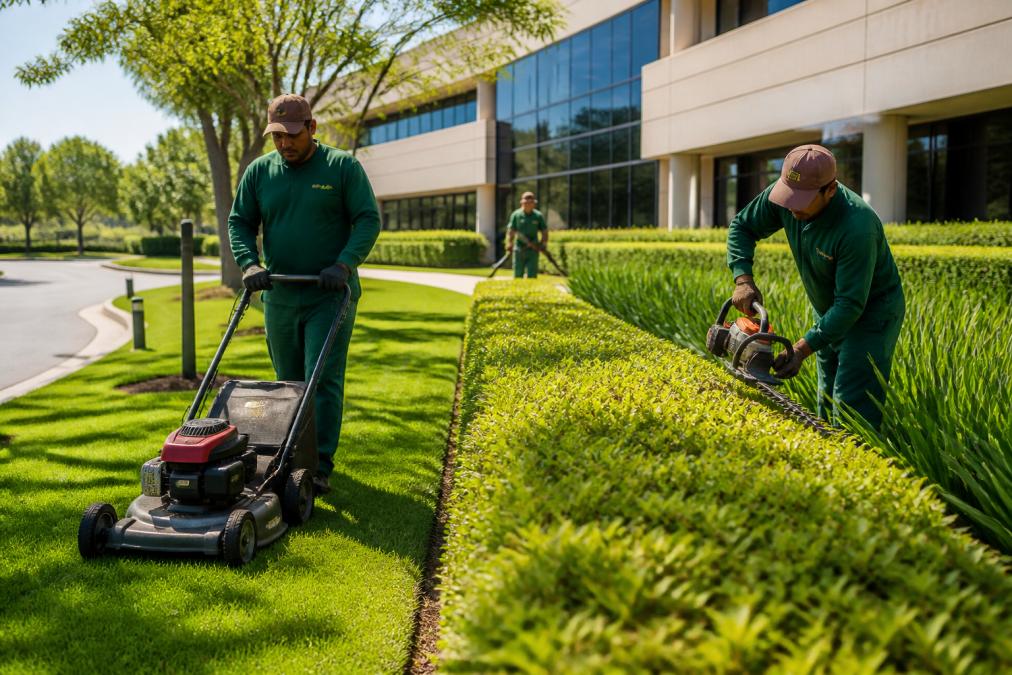
- Mowing and edging of all turf areas, with clippings removed
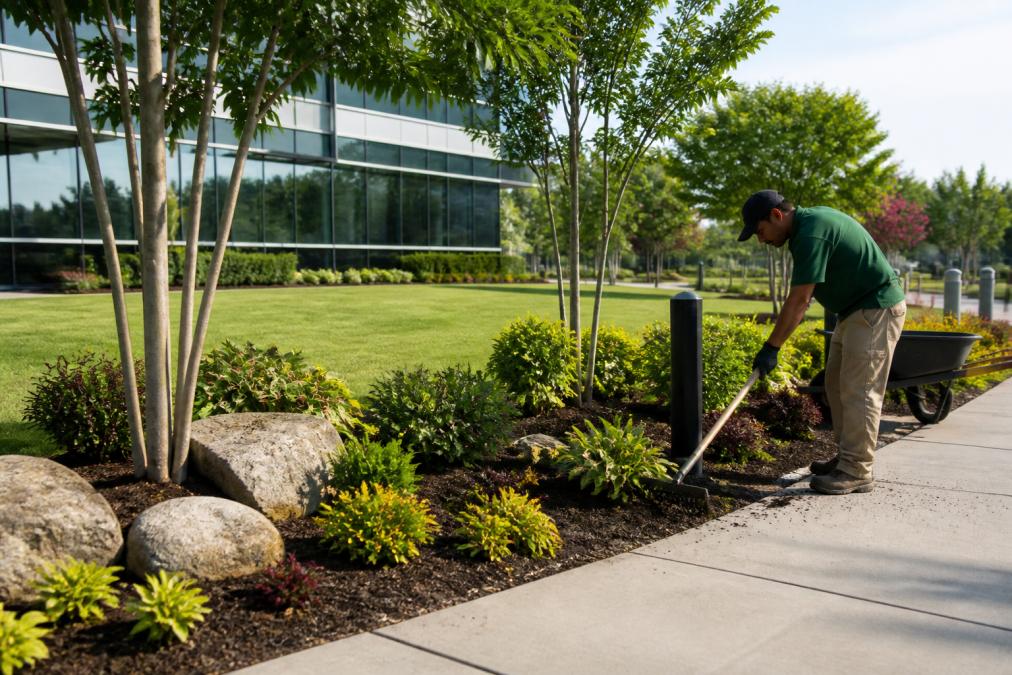
- Shrub trimming, pruning, and bed maintenance
- Weed control in plant beds, hardscape joints, and fence lines
- Debris removal and litter pickup across parking islands and walkways
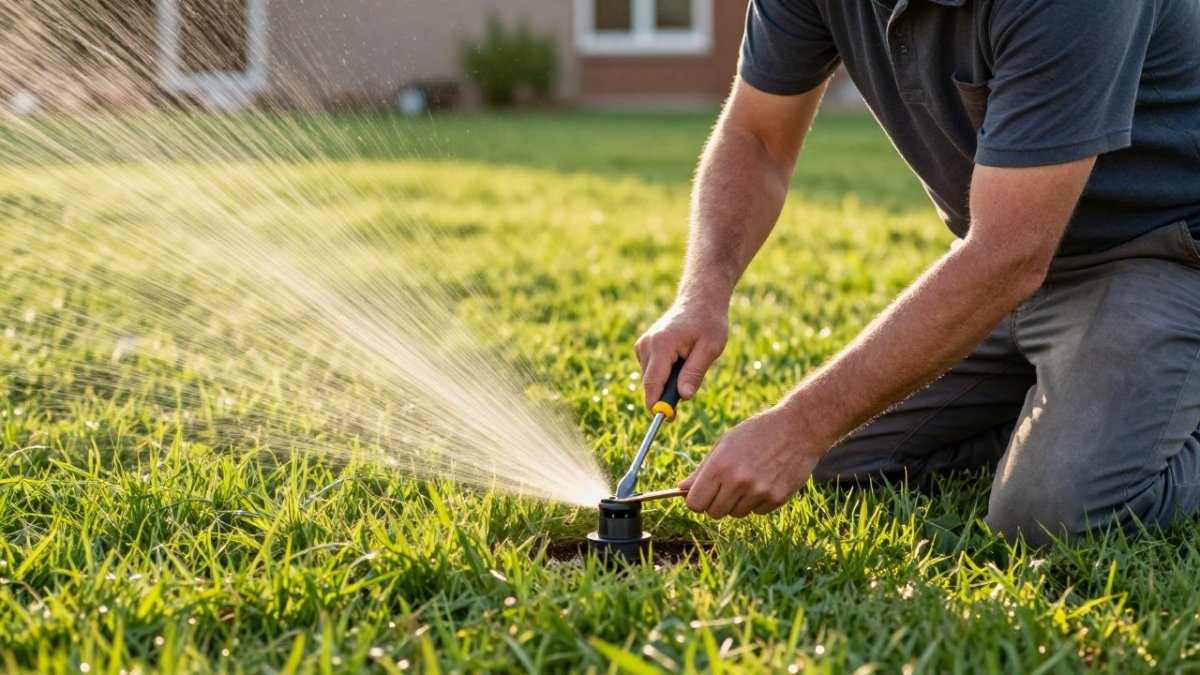
- Irrigation system checks for broken heads, leaks, and coverage gaps
- Mulching touch-ups and plant health care inspections
Seasonal and Annual Tasks
- Spring and fall cleanup, including leaf removal and bed turnover
- Fertilization programs timed to turf growth cycles
- Aeration and overseeding where the turf needs it
- Hardscape maintenance: sealing, joint repair, and pressure washing
- Snow and ice management planning before the first freeze
- Annual site assessment and landscape design refresh recommendations
| Task Category | Frequency | Who Confirms Completion |
|---|---|---|
| Mowing and edging | Weekly in growing season | Crew lead, photo log |
| Irrigation inspection | Monthly | Technician report |
| Fertilization | 2-4 times per year | Program schedule |
| Seasonal cleanup | Spring and fall | Property manager sign-off |
| Snow and ice management | Per event | Event log |
Average Cost of Commercial Landscaping per Month: What Drives the Number
There is no single monthly figure for commercial landscaping because pricing depends on acreage, service frequency, plant density, and site access. A half-acre office frontage with weekly mowing costs far less to maintain than a multi-building campus with mature trees, irrigation, and hardscape. What separates a useful proposal from a vague one is whether the provider shows you the pricing model behind the number.
The Three Pricing Models You Will See
- Per-visit (unit price). The provider quotes a flat rate per service visit, for example, a per-mow price plus a per-trim price. This model is transparent and easy to audit, but it can penalize you during slow growth months when crews still show up.
- Monthly flat fee. A single recurring charge covering all scheduled maintenance. Predictable for budgeting, but you need a scope exhibit that locks in frequencies so the provider cannot quietly reduce visits to protect margin.
- Cost-plus or time-and-materials. Common for large portfolios and project-heavy sites. The provider bills labor hours plus a markup on materials. This model rewards you when you can audit crew hours through digital work orders, and punishes you when you cannot.
What Actually Moves the Number
- Total maintained area. More turf and beds mean more labor hours per visit. Turf acreage is the single largest cost driver on most commercial sites.
- Service frequency. Weekly service costs more than biweekly but prevents the costly catch-up work that follows neglect. A biweekly schedule that slips to monthly often costs more over a season than weekly service would have.
- Site complexity. Slopes, narrow access points, heavy hardscape, and mature tree canopies slow crews down and require specialized equipment.
- Irrigation and drainage. Systems that need repair or redesign add project work on top of routine maintenance. A single broken mainline can consume a month of maintenance margin.
- Seasonal scope. Snow and ice management is typically priced separately from growing-season care, often on a per-event or seasonal-contract basis with a trigger depth defined in the agreement.
- Plant replacement and annual color. Seasonal rotations, mulch refresh, and plant replacement are usually billed as project work, not maintenance.
How to Benchmark a Bid
Because QEN Landscaping does not publish flat rates, the honest answer is that pricing is quoted per property after a site assessment. But you can still benchmark any proposal by asking for three things:
- A line-item breakdown that separates recurring maintenance from project work, so you can compare bids on equal terms.
- The assumed visit count per month and the crew size per visit. Two bids at the same monthly price can represent very different labor hours.
- The unit price for add-on work, extra mow, mulch install, irrigation repair, so you know what change orders will cost before you sign.
Commercial Landscaping Contract Template: Clauses That Protect Your Property
A commercial landscaping contract should define scope, schedule, service standards, insurance requirements, and termination terms in writing. Handshake agreements leave you with no recourse when service slips.
The clauses worth insisting on:
- Scope of work exhibit. Every task, frequency, and site area listed explicitly.
- Service level agreement (SLA). Response times for complaints, missed visits, and emergency calls.
- Insurance and indemnification. Certificates of insurance for general liability, workers' compensation, and auto coverage.
- Payment terms. Clear invoicing schedule and what triggers a change order.
- Termination clause. Notice period and conditions for ending the agreement.
- Property damage responsibility. Who pays when equipment damages irrigation lines, lighting, or hardscape.
Liability, Insurance, and Site Safety Requirements
Liability and insurance requirements are where most commercial contracts fall short. Ask for a certificate of insurance naming your property or management company as an additional insured, and verify it is current before work begins. A provider without workers' compensation coverage can leave a property owner exposed if a crew member is injured on site.
How to Vet Commercial Landscaping Providers Before You Sign
Vetting a landscaping provider means verifying experience, insurance, references, and communication practices before you commit to a contract. The cheapest bid is rarely the safest one.
Run every candidate through this checklist:
- Confirm years in business and commercial client references
- Request a certificate of insurance and verify coverage limits
- Ask for two or three current commercial properties you can visit
- Confirm who your day-to-day contact will be and how fast they respond
- Review the proposed scope of work line by line
- Check whether they handle irrigation, hardscape, and snow in-house or subcontract
- Ask how they document completed work, such as photo logs or service reports
Managing Multiple Commercial Properties With One Provider
Managing multiple commercial properties with one provider is possible, and it usually improves consistency while simplifying billing. The catch is that the provider needs the operational capacity to staff every site reliably, and that you need a management structure that lets you see every site without driving to each one.
1. A Portfolio-Wide Service Standard
Instead of letting each site drift toward its own look, define one standard that applies everywhere: mow height, edge crispness, bed weed tolerance, response time for complaints. That standard becomes the benchmark every site is measured against, and it is the fastest way to catch a property that is quietly falling behind.
2. A Single Account Manager With Defined Escalation
One point of contact reduces the coordination burden dramatically. Instead of chasing separate crews at each address, you get one account manager, one consolidated invoice, and one standard for how every property should look. But a single contact is only useful if there is a documented escalation path, who you call when the account manager is unreachable, and how fast a site-level issue reaches a supervisor.
3. Site-Level Reporting You Can Audit
This is where most multi-site relationships break down. Ask the provider how they document completed work at each address. Photo logs, digital service reports, and timestamped visit records let you verify service without visiting the site. If the provider cannot show you a sample report before you sign, assume you will be managing by complaint rather than by data.
Multi-Site Contract Terms Worth Negotiating
- Site-by-site scope exhibits. One master agreement, but each property gets its own scope, frequency, and pricing schedule.
- Portfolio-level SLA. Response times measured across the portfolio, not per site, so a slow response at one property counts against the whole relationship.
- Consolidated invoicing with site-level detail. One invoice, but line items broken out by property so you can allocate costs correctly.
- Volume or portfolio pricing. Providers with the capacity to serve multiple sites will often price the portfolio lower than the sum of individual site quotes, ask for it explicitly.
- Exit terms per site. You should be able to remove one property from the agreement without terminating the whole contract.
QEN Landscaping serves commercial clients across apartment complexes, condo communities, retail centers, and office parks, with a single point of contact for multi-site portfolios. With over 15 years of experience and a commitment to constant communication, the team coordinates grounds care so every property in a portfolio meets the same standard. Property managers who want one vendor instead of five can review portfolio management guidance from the Institute of Real Estate Management on standardizing vendor contracts across sites.
Frequently Asked Questions
What is included in a standard commercial landscaping contract?
A standard commercial landscaping contract covers mowing, edging, shrub trimming, weed control, fertilization programs, seasonal cleanup, and debris removal. It should also spell out visit frequency, response times for emergencies, insurance requirements, and payment terms. A service level agreement (SLA) defines measurable expectations, such as how quickly the provider responds to a complaint or repairs storm damage. Review every clause before signing, especially those covering liability and termination.
How often should commercial properties be landscaped?
Most commercial properties need mowing and trimming every 7 to 14 days during the growing season, with less frequent visits in winter. High-traffic retail centers and office parks often require weekly service to maintain curb appeal. Irrigation checks, fertilization, and weed control follow a monthly or quarterly schedule, while seasonal cleanup and mulching happen two to four times a year. Your provider should build a calendar around your property's specific turf health, plantings, and foot traffic.
What factors influence the average cost of commercial landscaping per month?
The average cost of commercial landscaping per month depends on property size, service frequency, plant and turf variety, irrigation complexity, and whether hardscape maintenance or snow and ice management is included. Multi-site portfolios and properties with extensive landscape architecture cost more to maintain. Pricing also varies by region and season. Because every property is different, request a site assessment and written quote rather than relying on a generic per-acre figure.
What is the difference between residential and commercial landscaping maintenance?
Commercial landscaping maintenance serves businesses, HOAs, retail centers, and office parks, so it emphasizes curb appeal, site safety, and consistent scheduling across larger areas. Providers carry higher liability insurance, use commercial-grade equipment, and often work under formal contracts with service level agreements. Residential work focuses on a single home and usually involves more flexible, informal arrangements. If you manage a commercial property, choose a provider experienced with commercial groundskeeping and multi-site portfolios.
Commercial grounds care fails quietly. A missed mowing cycle, a broken irrigation head, or an uninsured crew can turn into a liability claim or a tenant complaint before anyone notices. QEN Landscaping handles commercial properties with over 15 years of experience, customized solutions built around each site, and constant communication from the first site assessment to the final shrub installation. Request a free estimate and get a written scope of work before the season starts.