 Comparison
7 Sustainable Alternatives to Traditional Lawn Care
Last Updated: November 1, 2026
Quick Summary
Sustainable alternatives to traditional lawn care are planting strategies that replace or reduce conventional turfgrass with lower-input options like clover, native grasses, groundcovers, and meadow plantings. These swaps cut mowing, watering, and chemical inputs while improving resilience through dry spells. Match the plant to your site's climate, shade, and foot traffic.
- Clover fixes nitrogen from the air, so it needs little to no nitrogen fertilizer.
- Native perennials often need two to three growing seasons before a bed fills in.
- Smothering with cardboard and mulch takes 6 to 8 weeks in warm weather.
- Seed cool-season clover in early fall so plants establish before frost.
- Submit your landscape plan to your HOA before installing a meadow or clover conversion.
Table of Contents
- Why Homeowners Are Rethinking the Traditional Lawn
- Compare Grass Lawn Alternatives by Climate, Shade, and Foot Traffic
- Clover Lawn Pros and Cons: What to Know Before You Overseed
- Native Plants for Landscaping: Regional Suitability and Establishment
- Eco-Friendly Lawn Care: Maintenance, Water, and Total Cost of Ownership
- Installation Steps, Establishment Time, and Conversion Planning
- Local Rules, HOA Restrictions, and Trade-Offs to Plan For
- Frequently Asked Questions
Why Homeowners Are Rethinking the Traditional Lawn
Sustainable alternatives to traditional lawn care are planting strategies that replace or reduce conventional turfgrass with lower-input options like clover, native grasses, groundcovers, and meadow plantings.
The shift is real, even if the numbers are still emerging. A review published in the journal Diversity examined nature-based and rewilding-oriented alternatives to conventional lawns, and industry coverage from Millboard's guide to low-maintenance lawn alternatives notes that homeowners are actively exploring rewilding zones, artificial grass, and composite landscaping to cut maintenance. Meanwhile, the Reduce Your Lawn Day movement reported surpassing 63 million square feet of lawn transformation, according to EIN Presswire's coverage.
The traditional grass lawn is now one option among several. Below, we break down seven sustainable alternatives to traditional lawn care, compare them by climate, shade, and foot traffic, and walk through installation, cost of ownership, and the local rules that trip people up.
Compare Grass Lawn Alternatives by Climate, Shade, and Foot Traffic
No single grass lawn alternative wins everywhere. The right pick depends on three site conditions: climate, shade, and how hard you use the surface.
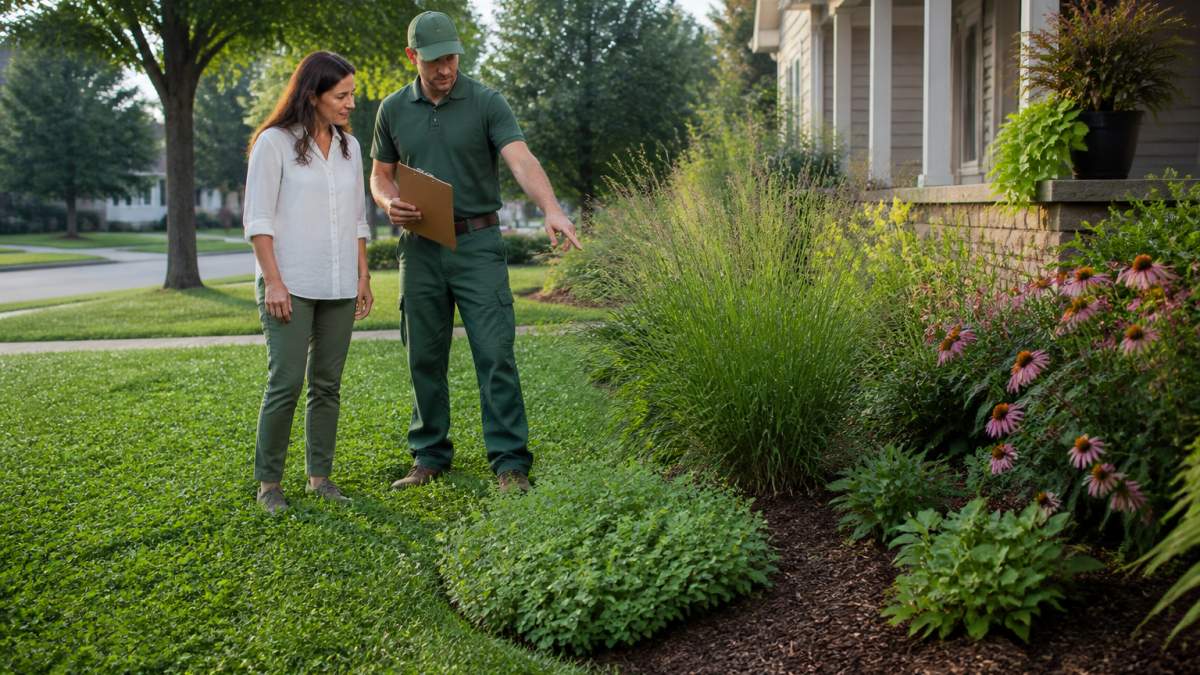
Here is how the main options stack up:
| Alternative | Best Climate | Shade Tolerance | Foot Traffic | Mowing |
|---|---|---|---|---|
| Clover / microclover | Cool to moderate | Moderate | Moderate | Rarely |
| Native grasses | Regional | Varies by species | Moderate to high | Seasonal |
| Wildflower meadow | Moderate to dry | Low | Low | Once yearly |
| Moss | Cool, damp | High | None | Never |
| Groundcovers (lilyturf, mondo grass) | Moderate | Moderate to high | Low to moderate | Rarely |
| Xeriscaping / gravel beds | Dry | N/A | Low | Never |
| Rain gardens | Wet or poorly drained | Moderate | None | Never |
The takeaway: match the plant to the site, not the other way around. Heavy shade and wet soil favor moss and rain gardens; daily kid and dog traffic favors native grasses or reinforced groundcover over a delicate meadow.
Clover Lawn Pros and Cons: What to Know Before You Overseed
A clover lawn is a turf replacement or overseeding strategy that uses white clover or microclover instead of, or mixed with, conventional grass. It fixes nitrogen, stays green through dry spells, and needs far less mowing and fertilizer than a traditional grass lawn.
The pros are real:
- Low input. Clover needs little nitrogen fertilizer because it fixes nitrogen from the air.
- Drought resilience. Deep roots keep it greener than grass in dry summers.
- Pollinator-friendly. White clover flowers feed bees and other beneficial insects.
The cons matter too. Clover flowers attract bees, a problem for barefoot traffic. It stains clothing more than grass and thins in deep shade. Microclover stays lower and flowers less.
Native Plants for Landscaping: Regional Suitability and Establishment
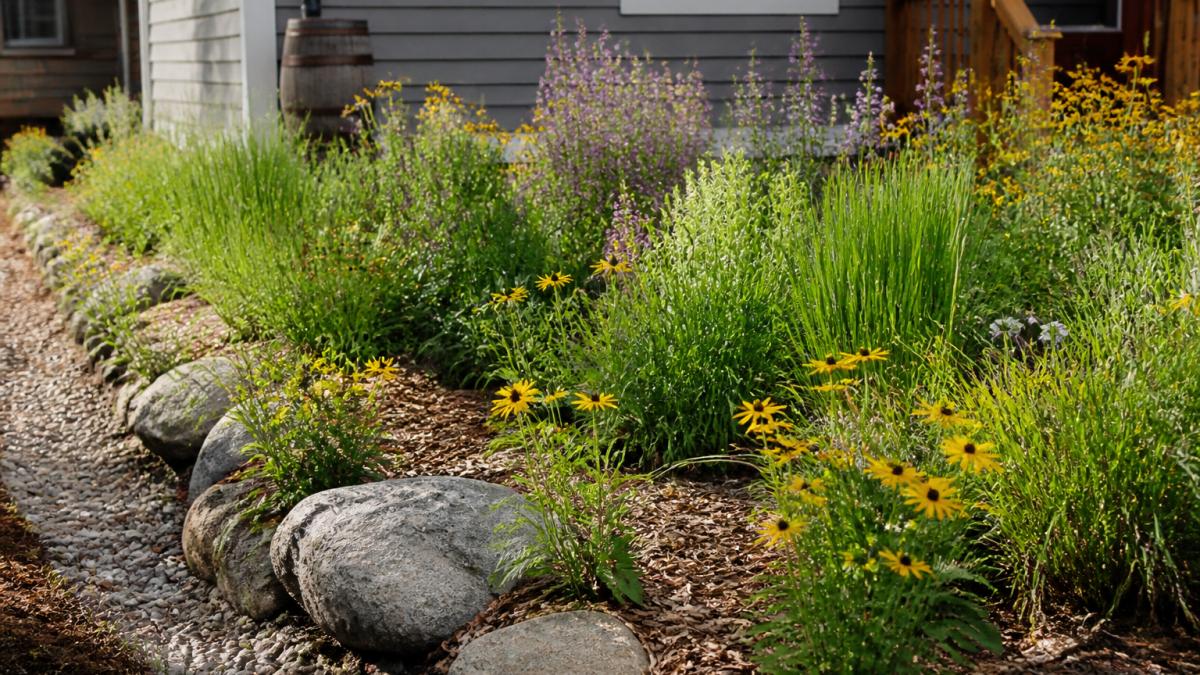
Native plants for landscaping are species that evolved in your region and support local insects, birds, and soil life.
Regional suitability is the whole game here. University extension programs are the best starting point; the University of Maryland Extension's lawn alternatives resource recommends native plant gardens, including flowers, shrubs, and trees, as a strong turf replacement.
Establishment takes patience. Native perennials spend the first season putting down roots, so top growth looks sparse; expect two to three growing seasons before a native bed fills in.
Eco-Friendly Lawn Care: Maintenance, Water, and Total Cost of Ownership
Eco-friendly lawn care means managing a landscape with fewer chemical inputs, less water, and less mowing, whether you keep some turf or convert fully. Savings show up over years, not weeks, and the only honest comparison adds up three cost lines: installation, ongoing maintenance, and water.
The three cost lines
1. Installation (upfront). This is where alternatives lose to conventional turf on paper. Cost drivers are turf removal, soil amendment, plant or seed material, and labor.
2. Ongoing maintenance (annual). This is where alternatives win back the money. Readers who want help keeping a converted lawn healthy can review professional lawn maintenance services.
3. Water (annual, climate-dependent). Water is the biggest lever and the hardest to generalize.
A simple way to compare options
Rather than chasing a single national number, build a five-year view for your own yard:
- Upfront: removal + soil prep + plant material + labor.
- Annual maintenance: mowing/trimming hours or service cost + fertilizer + weed control + replacement plants.
- Annual water: irrigation cost at your local rate, adjusted for the option's established water need.
The crossover point, where lower annual costs repay the higher upfront cost, depends on how much turf is removed and prior irrigation and mowing spending. The larger the converted area and the higher your water and mowing costs, the faster the payback.
Maintenance calendar by option
| Alternative | Mowing / cutting | Fertilizer | Water once established | Seasonal watch-outs |
|---|---|---|---|---|
| Clover / microclover | Rarely; occasional trim | Little to none (fixes nitrogen) | Low | Bee activity during bloom; stains clothing |
| Native grasses | Seasonal cutback | Low | Low to moderate | Slow first-year fill; species-dependent |
| Wildflower meadow | One annual cut | None | Low | Looks sparse in year one; weed pressure |
| Moss | Never | None | Moderate (needs moisture) | Scorches in sun; foot traffic damages it |
| Groundcovers | Rarely | Low | Low to moderate | Slow spread; buy enough plugs |
| Xeriscaping / gravel | Never | None | Very low | Drainage and weed barrier matter most |
| Rain garden | Never | None | None beyond rainfall capture | Needs correct sizing and overflow |
Where the money actually goes wrong
The most expensive mistakes are predictable. Planting into live turf without killing it off first forces a do-over. Under-buying plugs and seed leads to sparse coverage and a second purchase. Skipping a soil test means amending blind. And choosing an option whose trade-offs you cannot live with, a meadow where kids play, moss in full sun, means paying to convert again.
Installation Steps, Establishment Time, and Conversion Planning
Converting a lawn is a project, not a weekend. The biggest reason conversions fail is planting into living turf and watching old grass outcompete the new plants. Plan the work in phases so part of the yard stays usable.
Phase 1: Site assessment (1-2 weeks)
Before you kill anything, document four things: sun exposure (track it morning, midday, and late afternoon across a week), drainage (dig a foot-deep test hole, fill it with water, and time how long it drains), soil texture and pH (an inexpensive basic soil test through your state's cooperative extension tells you pH, phosphorus, and potassium), and foot traffic. Every plant choice downstream depends on this sheet.
Phase 2: Kill off the existing lawn (4-8 weeks)
There are three practical routes, and they differ in time, cost, and effort:
- Smothering (cardboard and mulch). Lay overlapping corrugated cardboard, wet it thoroughly, and cover with 3-4 inches of mulch. This takes 6-8 weeks in warm weather and is the lowest-cost, lowest-chemical route, best on small areas and beds.
- Solarization. Stretch clear plastic over moist, mowed turf and seal the edges. Four to six weeks of strong summer sun cooks the top layer of soil. It is cheap but seasonal and kills beneficial soil life in the top few inches along with the turf.
- Non-selective herbicide. One to two applications of a glyphosate-based product, spaced two to three weeks apart, is the fastest route for large areas. Follow the label exactly, and expect a wait period before seeding.
Whichever route you choose, do not skip this phase. Tilling live turf into the soil looks like progress and turns into a weed flush within weeks.
Phase 3: Soil preparation (1-2 weeks)
Test pH and adjust toward the range your chosen plants prefer, most native grasses and clover do well in slightly acidic to neutral soil, while some meadow species tolerate leaner, drier conditions. Amend with compost rather than synthetic fertilizer; a 1-2 inch layer worked into the top few inches improves drainage and water-holding capacity at once. Fix grade and drainage now, because re-grading after planting means starting over.
Phase 4: Plant or seed at the right time
Timing depends on the option:
- Cool-season clover and microclover: seed in early fall (roughly late August through September in most of the country) so plants establish before frost. Spring seeding works but competes with weeds.
- Warm-season native grasses: seed or plug in late spring to early summer, once soil has warmed.
- Wildflower meadow: fall seeding is common because many wildflower species need cold stratification; spring works for annual-heavy mixes.
Phase 5: Water through establishment
Deep, infrequent watering for the first full season. The goal is to push roots down, not to keep the surface wet. Most failures in year one come from light daily watering that encourages shallow roots and surface disease.
Phase 6: Monitor and fill gaps
Expect losses. Replant bare spots in the second season rather than the first, once you can see which areas actually failed and why.
Establishment timelines by alternative
| Alternative | Realistic time to fill in | Notes |
|---|---|---|
| Clover / microclover | One growing season | Fastest conversion; overseeding existing turf is the cheapest route |
| Groundcovers (lilyturf, mondo grass) | One to two years | Plugs fill slowly; buy more than you think you need |
| Native grasses | One to two seasons | Slow to establish top growth; roots go down first |
| Wildflower meadow | Two to three seasons | Looks sparse in year one; resist the urge to overseed |
| Moss | One to two seasons | Needs consistent moisture and shade |
| Xeriscaping / gravel beds | Weeks to install, permanent once set | The work is in prep and drainage, not plant establishment |
Phased conversion planning
Do not convert the whole yard at once. A common pattern is one zone per season: start with the area you use least (a side yard or a strip along the fence), learn what works on your site, and expand from there. Keep a mowed border around converted areas so the yard still reads as intentional, and keep a usable turf zone for kids and pets until the new plantings can take foot traffic.
Local Rules, HOA Restrictions, and Trade-Offs to Plan For
Before you rip out turf, check the rules.
The fix is to plan for it.
The trade-offs are worth naming honestly. Alternatives are not maintenance-free; they are lower-maintenance. Meadows need annual cutting and weed control. Moss needs moisture.
The right sustainable alternative depends on your site, your rules, and how you use the space, and getting it wrong costs more than doing it once.
Frequently Asked Questions
What can you do instead of grass?
You can replace turf with clover, native grasses, wildflower meadows, moss, or low ground covers such as lilyturf and mondo grass. Each option suits different conditions: clover handles foot traffic and poor soil, native grasses tolerate drought, and moss works in shade. A sustainable lawn plan usually mixes two or three types so the yard stays green without heavy watering, mowing, or fertilizer.
Which lawn alternatives need the least maintenance?
Moss and low ground covers such as dwarf myrtle need the least mowing, and native grasses and wildflower meadows need little watering once established. Clover and microclover need occasional mowing to stay tidy. Maintenance still includes edge trimming and weed control during establishment. A sustainable lawn reduces inputs but does not eliminate care, so plan for seasonal checks rather than weekly mowing.
Are native plants a good alternative to a traditional lawn?
Yes. University extension guidance identifies native plants as strong turf replacements because they suit local soil and climate and support pollinators and beneficial insects. Native plant gardens can include flowers, shrubs, and trees, not just ground cover. Establishment takes a season or two, and plant selection should match your shade, soil, and foot traffic. Converting in phases keeps the yard usable during the transition.
How do you replace a grass lawn with ground cover?
Start by testing soil and checking sun and shade, then remove or smother the existing turf. Install plugs or plants in spring or fall, water through the first season, and keep a mulch ring or bark beds around new plants. Establishment time varies by species, often one to two growing seasons. A phased conversion lets you keep some recreational lawn while the new ground cover fills in.
Can a sustainable landscape still include areas for recreation?
Yes. Many homeowners keep a smaller traditional lawn for play and convert the rest to clover, native grasses, or meadow. Fine fescues and clover tolerate moderate foot traffic, while moss and wildflower meadows do not. Zoning the yard by use keeps a sustainable lawn practical: high-traffic zones stay turf, and low-traffic borders become habitat and ground cover.