 Comparison
Sprinkler System Repair vs Replacement: Which to Choose
Last Updated: November 7, 2026
Quick Summary
Sprinkler system repair usually wins when the fault is local, the system is under 10 years old, and the repair costs less than half of replacement. Choose replacement when repairs exceed about half the replacement cost or the system is past 15 years with original pipe.
- Sprinkler system repair costs typically run $137 to $422, averaging $278, per Angi's 2026 data.
- In-ground repairs cost $100 to $490, while above-ground systems run $80 to $320.
- Most irrigation systems last 15 to 20 years with proper maintenance.
- Three or more separate failures in two seasons is a pattern worth pricing against replacement.
- A dead controller is a $100 to $500 fix, not a system replacement.
Table of Contents
- Sprinkler System Repair vs Replacement: The Core Decision
- Sprinkler System Repair Cost: What You'll Actually Pay
- Sprinkler System Life Expectancy and What Age Tells You
- Sprinkler System Troubleshooting: Diagnose Before You Decide
- How Long Does Sprinkler Repair Take?
- Signs You Need Replacement or an Upgrade
- Water Efficiency, Safety, and Long-Term Value
- Request a Free Estimate from QEN Landscaping
- Frequently Asked Questions
Sprinkler System Repair vs Replacement: The Core Decision
Sprinkler system repair costs typically run $137 to $422, with an average project cost of $278, according to Angi's 2026 repair cost data. That number matters because it frames the entire repair-versus-replacement question.
Here's the core tension: a damaged sprinkler system does not automatically require full replacement. Targeted repair often restores reliable performance, and the VFP Fire Sprinkler Repair vs. Replacement Guide makes this point clearly for fire systems too: damage to one component is not a verdict on the whole network.
Sprinkler system repair vs replacement comes down to three factors: the cost of the fix relative to a new system, the age and condition of your components, and whether failures keep repeating. This guide gives you a diagnostic framework, real cost ranges, and a decision tree so you stop guessing.
Sprinkler System Repair Cost: What You'll Actually Pay
LawnStarter's 2026 cost guide lists $80 to $320 for above-ground systems and $100 to $490 for in-ground systems. In-ground costs more because the work happens underground: digging, locating buried lines, and replacing fittings you can't see. The national average for a sprinkler system repair sits around $278, with most projects landing between $137 and $422, according to Angi's 2026 repair cost data.
Those ranges are a starting point, not a quote.
Itemized Repair Costs by Component
Component-level pricing tells you where your money goes:
| Component | Typical Repair Range | What Drives the Cost |
|---|---|---|
| Sprinkler head | $65 to $90 | Head type, accessibility |
| Valve repair or replacement | $75 to $300 | Valve size, buried depth |
| Controller repair | $100 to $500 | Board vs. full unit swap |
| Pipe or fitting leak | Varies by run length | Trenching, line depth |
| Pump repair or replacement | Varies widely | Pump size, horsepower, well vs. municipal supply |
These figures come from Prestonwood Landscape's irrigation cost guide and reflect common commercial-property repairs. Your actual repair estimate depends on access, soil, and how many components failed at once. Ask the contractor to separate labor from parts on the estimate; that split tells you whether the quote is inflated by parts markup or by the time the job genuinely takes.
How to Compare a Repair Quote Against a Replacement Quote
A repair quote and a replacement quote are not apples to apples until you normalize them. Do three things before you decide:
- Put both numbers on the same timeline. A $600 repair that buys three years costs about $200 per year. A $3,500 replacement that lasts 15 years costs about $233 per year. The repair wins on annual cost even though the sticker price looks smaller on the replacement side only when you stretch the horizon.
- Add the water bill to both sides. A leaking valve or a misaligned head wastes water every cycle. If your utility bill jumped after the problem started, that monthly delta belongs in the repair column as a recurring cost of waiting.
- Count the repair history. If you have paid for three or more separate fixes in the last two seasons, the replacement quote is competing against your past spending, not a single repair. Add those invoices up before you compare.
Watch out: a quote that bundles diagnosis, parts, and labor into one line hides which portion is variable. Ask for the diagnostic fee separately, because some contractors waive it if you approve the repair and others do not.
When Repair Costs Cross the Half-Replacement Threshold
A useful rule of thumb: when repairs exceed about half the cost of replacing the sprinkler system, replacement usually wins. Ecosystems NJ's 2026 repair-vs-replacement article frames this as a guideline, not a hard line. Treat it as a starting filter, then weigh age and repair history against it.
The threshold is a filter, not a verdict. Run the math both ways: if the repair is under half the replacement cost and the system is under 10 years old with no repeat failures, repair is usually the better financial call. If the repair is over half the replacement cost, or the system is past 15 years with original pipe, price the replacement before you approve the fix.
Sprinkler System Life Expectancy and What Age Tells You
Most irrigation systems last 15 to 20 years with proper maintenance, though heads, valves, and controllers fail sooner and get replaced individually along the way. Age alone doesn't decide anything. What age tells you is how much of the system is original and how close the remaining components are to their own end.
A 16-year-old system with a replaced controller and two new valves may have plenty of life left. A 12-year-old system with original heads, corroded fittings, and a failing pump is a different story. Check the repair history before you check the calendar.
Sprinkler System Troubleshooting: Diagnose Before You Decide
Inspect the system before you decide to replace it. Some problems trace back to a single broken head or a hidden leak, and a full-system replacement would be wasted money. Sprinkler system troubleshooting starts with observation: run each zone, watch pressure, and look for uneven coverage. Do this once per season, and again any time a zone stops performing.
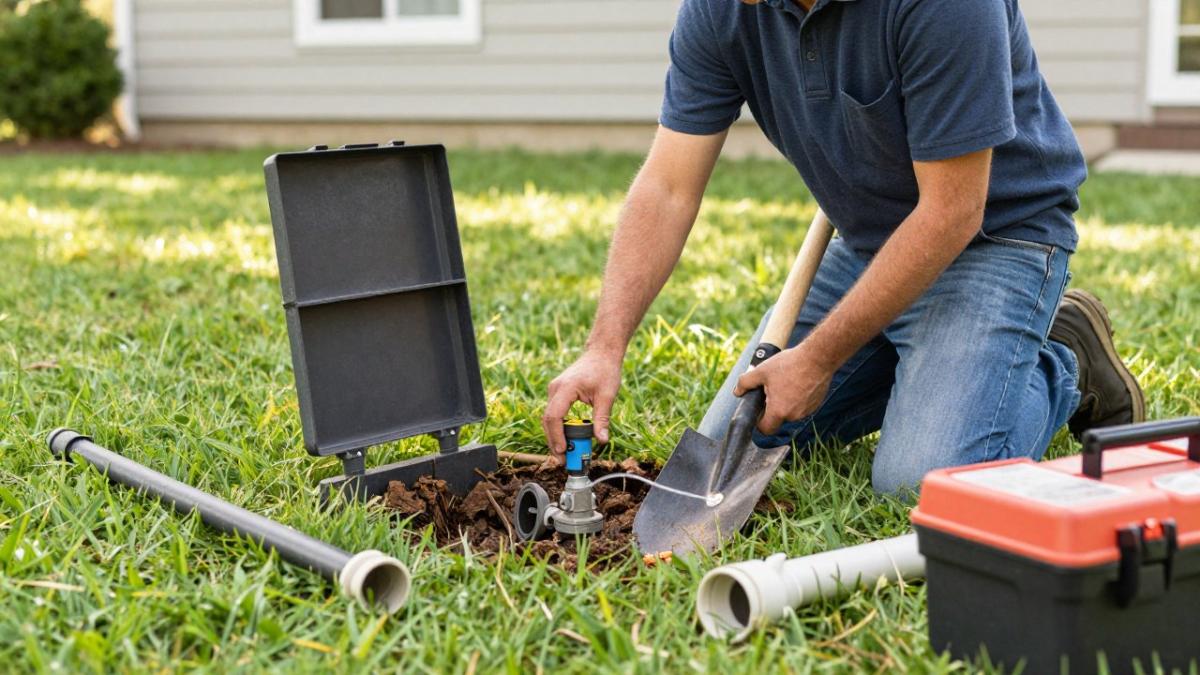
A Simple Diagnostic Decision Tree
Work through these in order. Each step has an observable test and a clear next move, so you are not guessing between repair and replacement.
Step 1: Is the problem one zone or the whole system? Run each zone manually from the controller.
Step 2: Is there visible water where it shouldn't be? Walk the zone while it runs.
Step 3: Does the controller power on and run schedules? A dead controller is a $100 to $500 fix, not a system replacement. Test it by running a manual cycle.
Step 5: How many components have failed in the last two seasons? Count separate repair invoices, not individual parts. Three or more separate failures in two years is a pattern worth pricing against replacement. One or two failures on a system under 10 years old is normal wear.
Skipping Step 1 and jumping straight to a parts swap can lead to unnecessary cost. Confirming how the zones respond before replacing a component helps avoid guesswork.
What the Decision Tree Tells You
The tree produces one of three outcomes. Repair when the fault is local, the system is under 10 years old, and the repair is under half the replacement cost. Upgrade when the pipe network is sound but the controller, heads, or valves are outdated; keep the pipe, replace the wear parts, and gain efficiency without a full installation. Replace when failures are spreading across zones, the system is past 15 years with original pipe, or the repair quote crosses the half-replacement line. The tree does not make the decision for you, but it narrows the choice to one path before you call a contractor.
How Long Does Sprinkler Repair Take?
Repair time depends on the component and access. Single-component repairs are often quick, while leak repairs and line replacements can take longer because they involve locating the fault and trenching. How long sprinkler repair takes depends on access and whether the fault is above ground or buried.
The diagnostic step is often the slow part. Finding a hidden leak in an in-ground system can take as long as the repair itself. A technician who skips diagnosis and starts swapping parts will bill you for guesswork.
Signs You Need Replacement or an Upgrade
Replacement makes sense when the system's core infrastructure is failing, not just its wear parts. Watch for these signals:
- Corroded or cracked pipes across multiple zones, not one isolated fitting
- Recurring repairs at different points each season
- A pump at the end of its service life pushing weak pressure everywhere
- Uneven coverage that persists after head and valve fixes
- An outdated controller that can't run smart schedules or respond to weather
An upgrade can also be the smarter middle path: keep the pipe network, replace the controller and heads with water-efficient models, and gain performance without a full installation. If you're weighing that middle option, our professional lawn maintenance services NJ guide covers how ongoing care protects the investment either way.
Water Efficiency, Safety, and Long-Term Value
Water waste is the hidden cost of a failing system. A leaking valve or a misaligned head can waste water every cycle, and that loss compounds month after month.
One clarification worth making: irrigation systems and fire sprinkler systems are different animals. Fire sprinkler decisions involve code and safety requirements that lawn irrigation never touches, and the repair-versus-replacement logic for fire protection belongs with a licensed fire protection contractor, not a landscape crew.
Long-term value favors the option with the lower cost per year of reliable service. A $400 repair that buys five more years beats a replacement every time. A $400 repair on a system already averaging two failures a season just delays the inevitable.
Request a Free Estimate from QEN Landscaping
The decision comes down to diagnosis, cost comparison, and an honest look at repair history. Get the diagnosis wrong and you either overspend on a replacement you didn't need or keep patching a system that's finished. That's where we come in.
At QEN Landscaping, we bring over 15 years of experience to landscaping projects, serving both residential and commercial clients with customized solutions. We maintain constant communication until the job is done. Request a free estimate from QEN Landscaping to discuss your sprinkler system.
Frequently Asked Questions
What is the 3x rule for sprinklers?
The 3x rule is a fire-protection guideline, not an irrigation one. It holds that a fire sprinkler system should be replaced when repair costs reach roughly three times the cost of a new system, or when the system has been out of service for an extended period. Always get an inspection first, because a single broken head or hidden leak can look like a system-wide failure.
Is repair a better option than replacement?
Often, yes. A damaged sprinkler system does not automatically need full replacement, and targeted repairs can restore reliable performance when the fault is localized. Repair makes the most sense when the system is under 15 years old, failures are isolated, and the repair cost stays well below half of replacement. Replacement wins when repairs recur, water pressure stays uneven after fixes, or the controller and piping are obsolete. An inspection separates the two cases before you spend.
What is the average cost to repair a sprinkler system?
Your actual sprinkler system repair cost depends on the fault, access, and system type, so get a written estimate.
What is the typical life expectancy of a sprinkler system?
Most irrigation systems last 15 to 20 years with regular maintenance, though heads, valves, and controllers fail sooner and are replaced individually along the way. Age alone does not justify replacement. A 20-year-old system with a solid repair history and even coverage can keep running, while a 10-year-old system with repeated leaks, corrosion, and pressure problems may be a candidate for an upgrade. Pair the age with the repair record and a water-efficiency check before deciding.
How long does sprinkler system repair usually take?
How long sprinkler repair takes depends on the fault. A single head or nozzle swap is often quick, while valve, controller, and mainline leak work can take longer depending on the fault. Diagnostic time adds to the visit. Ask the technician to confirm the scope after troubleshooting, and schedule repairs when the system is not mid-cycle so the work is not rushed.