 How-to
How to Fix Standing Water in Your Backyard
Table of Contents
- Why Water Pools in Your Backyard (and Why It Won't Drain on Its Own)
- How to Regrade a Yard for Drainage
- French Drain Installation: Cost, Materials, and When It Makes Sense
- Surface Solutions: Catch Basins, Dry Creek Beds, and Permeable Pavers
- Improving Soil and Lawn Health to Absorb More Water
- How Long Does Sprinkler Repair Take on Average (and Why It Matters for Drainage)
- Legal, Zoning, and Maintenance Considerations
- When to Call a Professional
- Frequently Asked Questions
Last Updated: September 13, 2026
Why Water Pools in Your Backyard (and Why It Won't Drain on Its Own)
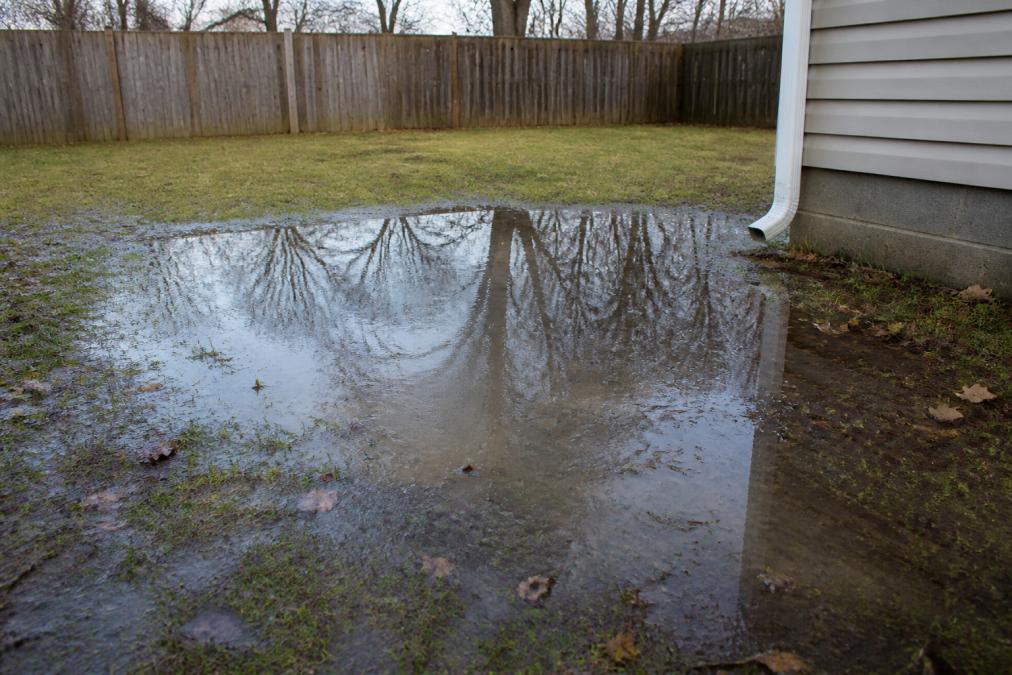
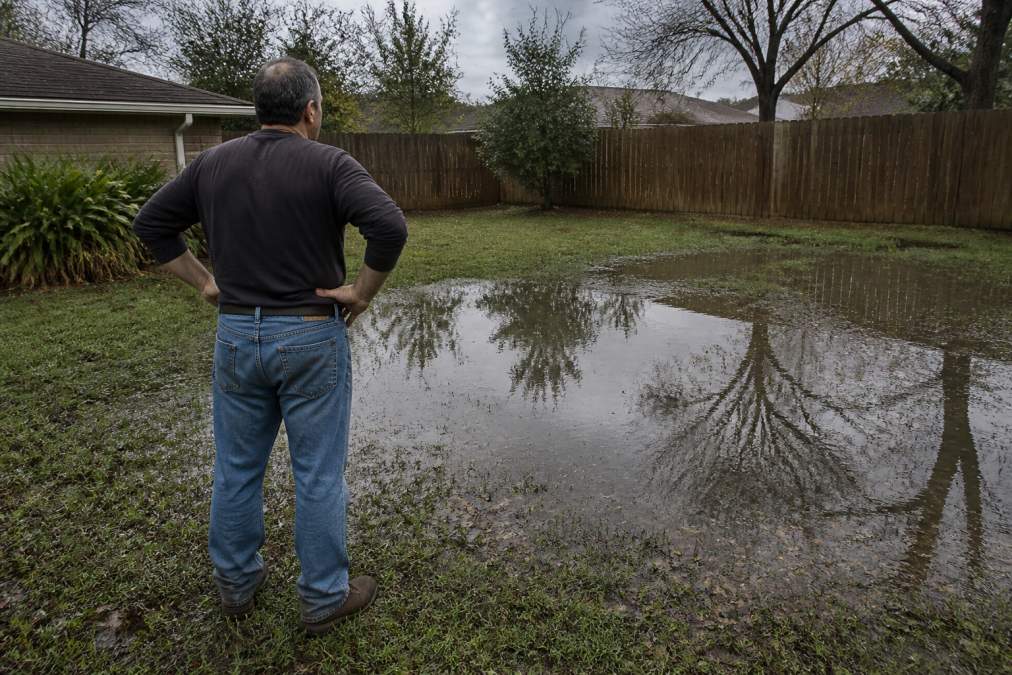
Standing water in a backyard is surface water that cannot infiltrate the soil or reach a drainage outlet fast enough after rain, snowmelt, or irrigation. At QEN Landscaping, we see this problem on properties across Central New Jersey every season, and it rarely fixes itself.
The reason is simple physics. Water follows the path of least resistance, and once soil is saturated, that path is sideways across your lawn rather than down through it.
Clay Soil, Compaction, and the Water Table
Clay soil is the most common culprit. Its particles are tiny and tightly packed, so water absorption is slow even when the ground looks dry. Add years of foot traffic, mowing, and construction equipment, and you get soil compaction: a hard layer that sheds water instead of soaking it in. When the water table sits high after a wet spring, there is simply nowhere for excess water to go.
How to Diagnose Your Drainage Problem
Diagnosis starts with three questions: where does the water come from, where does it sit, and where can it go? A percolation test answers the third. Dig a hole roughly 30 centimeters deep, fill it with water, and watch how fast it drains. If it empties within a few hours, your soil absorbs reasonably well. If it sits overnight, you have a drainage problem, not just a low spot. Many homeowners skip this step and buy a solution before they know the cause.
How to Regrade a Yard for Drainage
Regrading is the practice of reshaping your yard's surface so water flows away from your foundation and toward a safe outlet. It is the cheapest fix when the problem is surface-level.
The target is a drainage slope of roughly 2 percent, about 2.5 centimeters of drop per meter, moving away from the house (hud.gov). Here is the process:
- Map the existing slope with a string level or a long straightedge.
- Mark the high and low points with stakes.
- Add topsoil to low spots in thin lifts, tamping each layer.
- Rake the surface smooth and recheck the slope.
- Seed or sod the bare areas and water consistently for two weeks.
A common mistake is piling soil against the foundation to "hide" a low spot. That traps water at the wall and increases hydrostatic pressure, the force saturated soil exerts against a foundation. You are trading a wet lawn for a wet basement.
French Drain Installation: Cost, Materials, and When It Makes Sense
A French drain is a subsurface drainage system made of a gravel-filled trench containing a perforated pipe wrapped in filter fabric. It intercepts groundwater and redirects it to a safe outlet, such as a drainage ditch or storm connection where local rules allow.
What Drives the Cost
Pricing depends on trench length and depth, soil conditions, outlet location, and whether the trench crosses hardscape. On heavy clay, crews often need to bring in gravel aggregate and haul out spoil, both of which affect the final number. Because every yard is different, we quote after a site visit rather than over the phone. Request a free estimate from QEN Landscaping for a realistic figure.
DIY vs. Hiring a Professional
| Factor | DIY | Professional |
|---|---|---|
| Time for a 30-meter run | 2-4 weekends | 1-2 days |
| Trenching | Hand tools | Machine trencher |
| Slope accuracy | Hard to verify | Laser-checked |
| Outlet legality | Easy to miss | Handled |
| Warranty | None | Workmanship covered |
Digging by hand through compacted clay is the part most DIY guides gloss over. It is brutal work, and a slope error of a few centimeters means the pipe holds water instead of moving it.
Surface Solutions: Catch Basins, Dry Creek Beds, and Permeable Pavers
Surface drainage handles water before it ever reaches the soil. These systems are faster to install than a full subsurface network and, when sized correctly, they move a surprising volume of water.
Catch Basins
A catch basin is a box with a grate that collects runoff and ties into an underground pipe. It is the right tool for a low point that gathers water from a wide area, like the bottom of a driveway apron or a swale between two yards.
Sizing matters more than most guides admit. A basin that is too small will overflow in a heavy storm, and an undersized outlet pipe will back water up into the yard. The basin should sit at the lowest point, with the surrounding grade sloping toward the grate on all sides. The outlet pipe needs a continuous downward slope to daylight or to a storm connection where local rules allow, a flat or back-sloped run defeats the whole system.
Maintenance: clear the grate of leaves and debris before every rainy season, and lift the grate once a year to check that sediment has not filled the sump below. A basin that stops draining is almost always clogged at the grate or the outlet, not broken.
Dry Creek Beds
A dry creek bed is a shallow, gravel-and-stone channel that looks like landscaping but moves water. It works well where a visible flow path is acceptable and a swale would look out of place, along a fence line, down a slope, or through a planting bed.
The channel should follow the natural low path of the yard and be lined with landscape fabric under the stone to slow weed growth and prevent the stone from sinking into mud. Use larger riprap or boulders along the edges and smaller river rock in the center. The bed needs a continuous downhill slope to its outlet; a level creek bed just becomes a decorative puddle.
Maintenance: rake out leaves and sediment each fall, and reset any stones that have shifted after a heavy flow. Over a few seasons, silt will fill the voids between stones and reduce capacity, top-dress with fresh stone when that happens.
Permeable Pavers
Permeable pavers are interlocking units with gaps that let water pass into a gravel base below. They suit driveways and patios where you want hardscape without the runoff a solid slab would create.
The performance lives in the base, not the paver. A properly built system uses an open-graded gravel reservoir beneath the pavers, sized to hold the storm volume for your area, with filter fabric separating the base from the native soil. Skip the reservoir and the pavers become a decorative lid over a mud pit.
Maintenance: sweep or vacuum the joints periodically to keep them open, and avoid dumping sand or fine soil onto the surface. Once the joints clog, water sheets off the pavers instead of through them.
Matching the Solution to the Site
- Catch basin: a defined low point that collects water from a wide area
- Dry creek bed: a visible flow path where a swale would look out of place
- Permeable pavers: driveways and patios where you want hardscape without runoff
Landscape fabric belongs under gravel and stone, not over it. Laid on top, it clogs with sediment and stops water from entering the system.
Improving Soil and Lawn Health to Absorb More Water
Healthy soil is the cheapest drainage system you own. When it is compacted and starved of organic matter, it behaves like pavement.
Core Aeration and Dethatching
Core aeration pulls small plugs of soil from the lawn, opening channels for air, water, and roots. Dethatching removes the matted layer of dead grass that sheds water. For clay soil, aerating once in early fall is the single highest-return maintenance task on the calendar.
Soil Amendments and Topsoil
A soil test tells you what your ground actually needs. In clay-heavy yards, mixing in compost improves soil structure and water absorption over time. Spread a thin layer of topsoil and compost after aeration and let the worms and roots work it in.
How Long Does Sprinkler Repair Take on Average (and Why It Matters for Drainage)
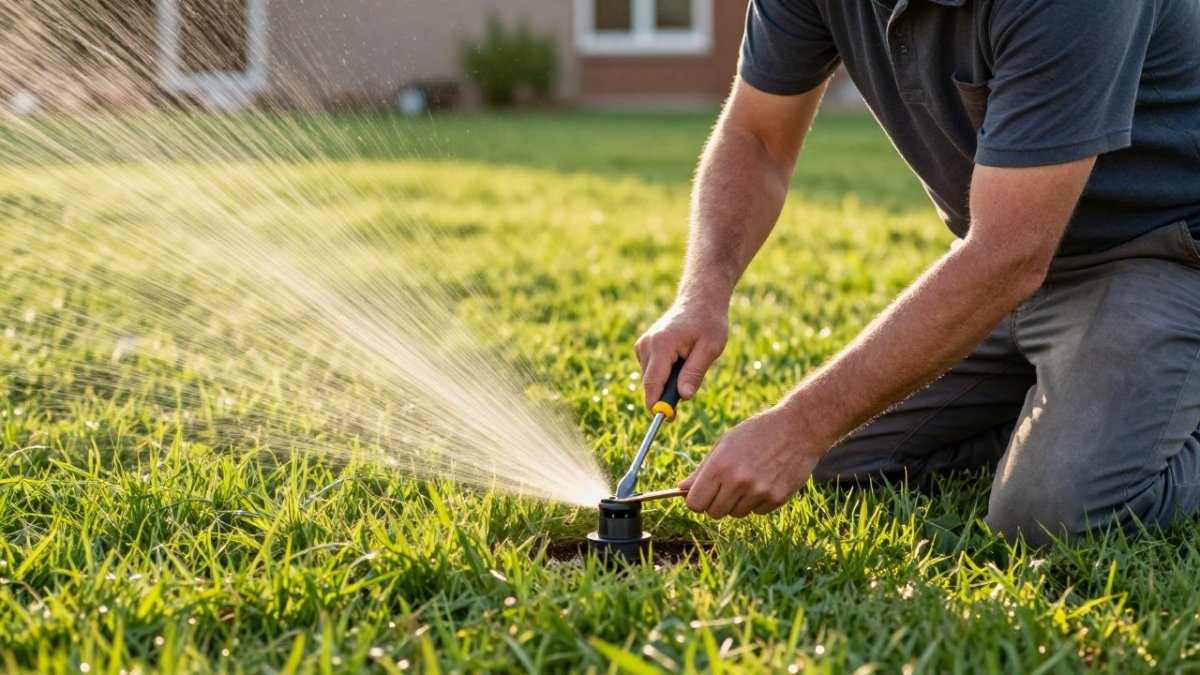
Most sprinkler repairs take one to three hours, though a broken main line or a valve replacement can stretch to a full day. Timing matters because a leaking irrigation line keeps soil saturated long after rain stops, which turns a small wet spot into a permanent one.
If you notice a soggy patch that stays wet between watering cycles, shut the system off and have it inspected. Fixing the leak often resolves the standing water without any excavation at all.
Legal, Zoning, and Maintenance Considerations
Before you dig, check your municipal code. Many towns require permits for grading work that changes drainage patterns, and most restrict where you can discharge water. Call 811 before any trenching to have underground utilities marked (811 In Your State). This is free and required in most states.
Once installed, drainage systems need upkeep:
- Clear catch basin grates of leaves each fall
- Flush French drain lines annually
- Recheck regraded slopes after the first heavy rain
- Inspect the outlet after every major storm
Skipping maintenance is how a working system becomes a clogged one within two seasons.
When to Call a Professional
Call a professional when water reaches the foundation, when the problem spans multiple yards, or when you have already tried regrading without success. Those situations usually need a designed subsurface system, not a bag of topsoil.
QEN Landscaping has handled drainage and grading work for residential and commercial clients for over 15 years, and we stay in contact until the job is done. Request a free estimate and we will diagnose the cause before recommending a fix.
Frequently Asked Questions
What will soak up standing water in the yard?
Plants with deep roots and high water uptake, such as native grasses, sedges, and rain garden species, absorb water from saturated soil. A rain garden planted in a low spot can take in hundreds of gallons during a storm. For immediate relief, a sump pump or a temporary drainage ditch moves water faster. Long term, fixing the underlying cause (compaction, grading, or a blocked drain) is the only permanent solution.
How long does it take for standing water to dry?
Standing water on clay soil can take 24 to 72 hours to drain after a heavy rain, depending on temperature, wind, and shade. On sandy or loamy soil with good structure, it may disappear within a few hours. If water remains for more than 48 hours after rain stops, that points to a drainage problem that needs regrading, a French drain, or soil improvement.
How to get rid of stagnant water puddles?
Start by finding the source: check gutters, downspout extensions, and grading. Clear any blocked catch basins or drainage ditches. If the puddle sits in a low spot, fill it with topsoil and regrade the area so it slopes away from the foundation at a minimum 2% grade. For recurring puddles, install a French drain or dry creek bed. Mosquitoes breed in stagnant water within 7 to 10 days, so act quickly.
When should you call a professional for yard drainage issues?
Call a professional when water pools near your foundation, when you have tried regrading and surface fixes without success, or when the problem involves a high water table or clay soil that needs subsurface drainage. A pro can run a percolation test, design a French drain or catch basin system, and handle trenching and perforated pipe installation correctly. QEN Landscaping offers free estimates for drainage assessments.
Fixing standing water starts with diagnosis, not guesswork. If your yard floods after every storm and DIY fixes have not held, QEN Landscaping can design a solution built for your soil and slope. We bring over 15 years of experience, customized solutions for residential and commercial properties, and a commitment to communication from first call to final walkthrough. Get started with QEN Landscaping and request a free estimate for a backyard that drains the way it should.