 Listicle
Central Jersey Landscaping Alternatives: 2026 Guide
Table of Contents
- Quick Comparison: Landscaping Alternatives at a Glance
- Native Plant Landscaping NJ: A Low-Water Alternative to Turf
- Professional Lawn Maintenance Services NJ: When to Keep Your Lawn
- Hardscaping and Softscaping Alternatives for Central Jersey Yards
- Cost-Benefit Analysis: What Central Jersey Landscaping Alternatives Really Cost
- HOA Compliance and Local Soil: What Central Jersey Homeowners Must Know
- Which Central Jersey Landscaping Alternative Fits Your Property?
- Frequently Asked Questions
Last Updated: September 20, 2026
Quick Comparison: Landscaping Alternatives at a Glance
A landscaping alternative is any designed outdoor feature that replaces or reduces conventional turf grass, such as native plant beds, hardscaping, groundcovers, or sustainable irrigation. Central Jersey homeowners choose them because they cut long-term maintenance and hold up through drought and heavy rain. This guide from QEN Landscaping breaks down the main options, their costs, and how to choose the right fit for your property in 2026.
| Alternative | Upfront Cost | Ongoing Maintenance | Best For |
|---|---|---|---|
| Native plant beds | Moderate | Low once established | Pollinator-friendly yards |
| Hardscaping (patios, walkways) | High | Very low | Outdoor living space |
| Groundcover instead of turf | Low to moderate | Low | Slopes and shaded areas |
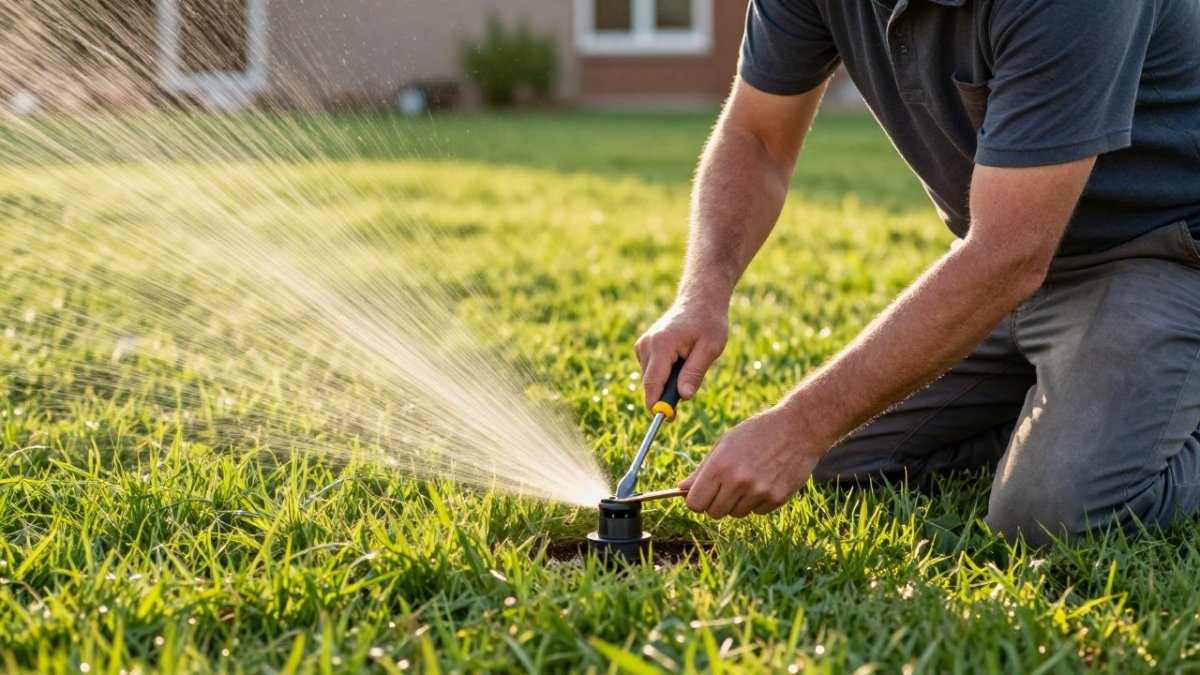
| Drip irrigation | Moderate | Low | Water conservation |
| Professional lawn care | Low entry | Recurring | Curb appeal with turf |
The trade-off is clear: pay more upfront for a permanent feature, or pay less now and accept recurring maintenance. Most properties combine two or three of these.
Native Plant Landscaping NJ: A Low-Water Alternative to Turf
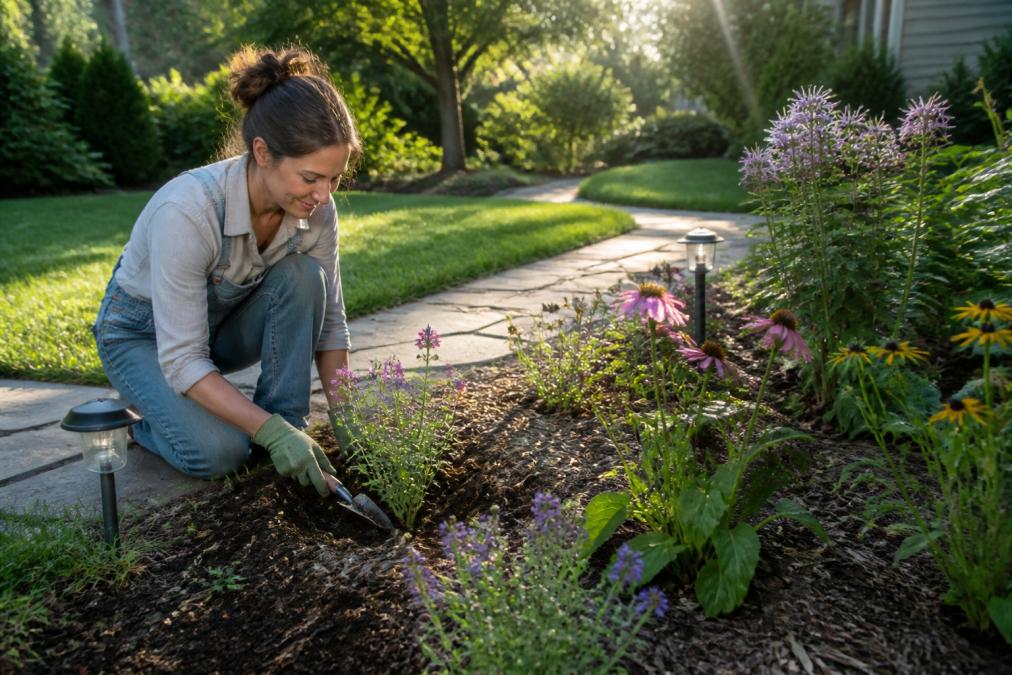
Native plant landscaping fills beds with species that evolved in the local climate, so they need little watering or fertilizer once established. In Central Jersey, that means native perennials, trees, and evergreen shrubs suited to clay-heavy soil and humid summers.
A common mistake is planting natives in poor soil and expecting them to thrive unamended. Most native perennials still want decent drainage and mulch in year one; after that, they need far less input than turf.
For homeowners who want color and pollinators, a pollinator garden built on native perennials is one of the most rewarding landscaping alternatives. It supports biodiversity and cuts mowing time. The USDA Natural Resources Conservation Service guide to native plants explains how regionally adapted species reduce water and chemical use.
Professional Lawn Maintenance Services NJ: When to Keep Your Lawn
Professional lawn maintenance services make sense when you want turf without the weekend work, or when an HOA requires a maintained lawn. If you have kids, pets, or need a uniform green surface, keeping some turf and hiring reliable care is the smarter call.
The key is deciding how much lawn you actually use. Many homeowners reduce turf to a functional strip and convert the rest to beds or hardscaping, keeping curb appeal while trimming mowing and watering.
When evaluating a maintenance provider, ask how they handle scheduling and communication.
Hardscaping and Softscaping Alternatives for Central Jersey Yards
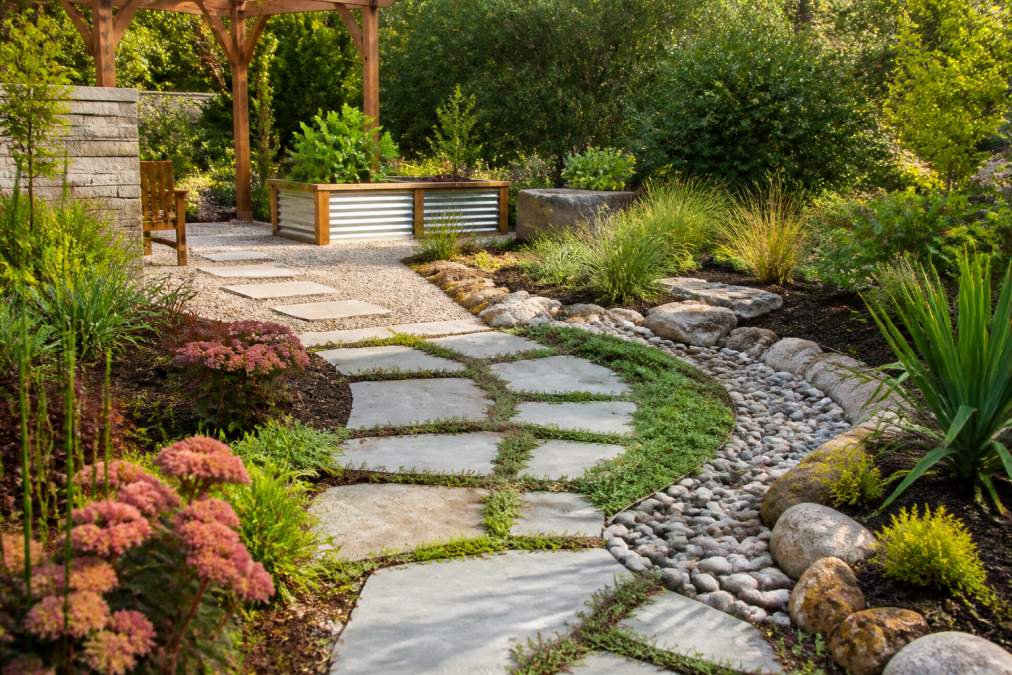
Hardscaping covers the built elements of a yard: patios, walkways, retaining walls, and stone borders. Softscaping covers the living elements: plants, beds, mulch, and groundcover. The strongest yards blend both, using hardscaping to define outdoor living space and softscaping to soften it.
Cost-Benefit Analysis: What Central Jersey Landscaping Alternatives Really Cost
Most guides stop at "native plants save money", a slogan, not a cost-benefit analysis. A real comparison separates four numbers: upfront installation, annual upkeep, water and input costs, and the replacement cycle each option forces on you.
| Option | Upfront | Yearly Upkeep | Water Demand | Replacement Cycle |
|---|---|---|---|---|
| Turf lawn | Low | High | High | Overseed/aerate every few years |
| Native beds | Moderate | Low after establishment | Low once rooted | Plants self-sustain; mulch refresh |
| Hardscaping | High | Very low | None | Decades with proper base |
| Groundcover | Low to moderate | Low | Low | Fills in and spreads |
| Drip irrigation | Moderate | Low | Very low | Emitters and tubing replaced occasionally |
HOA Compliance and Local Soil: What Central Jersey Homeowners Must Know
Two things derail eco-friendly yard conversions more than anything else: HOA rules and soil. Both are solvable if you handle them before ordering a single plant.
Navigating HOA Rules for an Eco-Friendly Yard
Most community covenants were written with turf in mind, so read what yours actually says rather than assume. The provisions that most often affect a conversion:
- Turf minimums. Some associations require a percentage of the front yard to remain lawn. Find the number before you design.
- Approved plant lists. A few covenants name specific species or ban others. Native perennials are rarely prohibited, but ornamental grasses and tall wildflower meadows sometimes are.
- Height and setback rules. Tall plantings near the street or a property line may be capped. This affects meadow-style designs more than layered beds.
- Hardscape restrictions. Fence, wall, and patio materials, colors, and heights are commonly regulated, and some associations require a survey or engineered drawing for retaining walls.
- Maintenance standards. Even a native bed can violate a covenant if it reads as "unkempt." A defined edge, mulch, and a mowed border strip usually satisfy this.
A practical approval sequence:
- Pull your community's landscaping covenants and any architectural review guidelines, and note every turf, plant, height, and hardscape restriction.
- Photograph the existing yard and sketch your proposed layout to scale, marking turf you plan to remove and turf you plan to keep.
- Build a plant list with botanical names, mature heights, and spacing so the reviewer can see the design is intentional, not a wild meadow.
- Submit a written plan with plant lists, hardscape dimensions, and a simple maintenance description (mowing edges, seasonal cutback, mulch refresh).
- Attend the architectural review meeting if your association holds one, a two-minute explanation of the design often prevents a denial.
- Get approval in writing before ordering materials or breaking ground.
- Keep the approved plan and any correspondence for future reference, especially if you sell.
Reading Your Soil Before You Plant
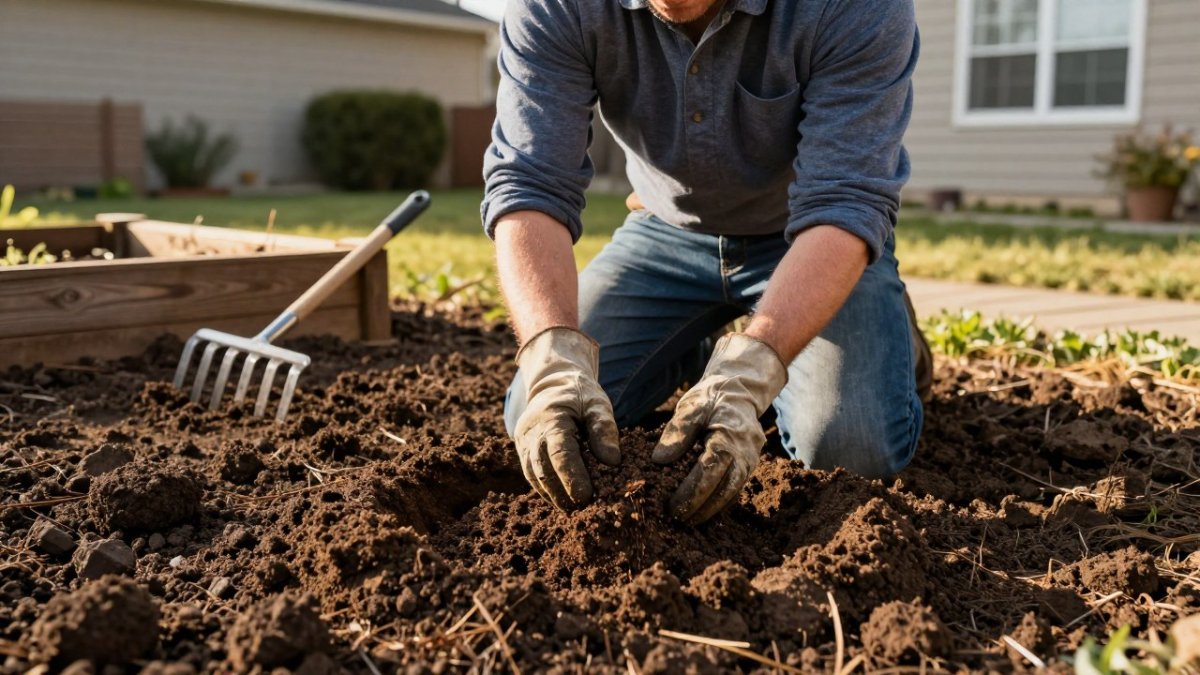
Soil is the second hurdle, and the one homeowners most often skip. Much of the region sits on heavy clay that drains slowly, compacts easily, and holds water against foundations. Other pockets are sandy and drain too fast to hold moisture or nutrients. The two problems need opposite fixes, so guessing is expensive.
What each soil type needs.
- Clay: amend with organic matter, avoid working it when wet, and plant species that tolerate slow drainage. Beds benefit from being slightly raised so roots sit above the waterlogged layer. Mulch heavily to reduce compaction from rain impact.
- Sandy: amend with organic matter to improve water and nutrient retention, and mulch to slow evaporation. Drip irrigation paired with sandy soil needs shorter, more frequent cycles because water moves past the root zone quickly.
Which Central Jersey Landscaping Alternative Fits Your Property?
Match the alternative to how you actually use the yard. A family that runs on the lawn keeps some turf. A homeowner who travels keeps native beds and hardscaping. A property manager juggling multiple sites wants one reliable crew.
Ask three questions:
- How much of the yard do we actually use?
- How much time and money can we commit each year?
- What does the HOA allow?
Frequently Asked Questions
What are some good native grass alternatives for lawns in New Jersey?
Native groundcovers like Pennsylvania sedge, wild ginger, and moss phlox can replace turf in shady or low-traffic areas. For sunny spots, little bluestem and switchgrass offer drought tolerance and wildlife value. These alternatives need less mowing, water, and fertilizer than traditional lawn grass. A professional can help you choose species that match your soil and light conditions.
How can I reduce my lawn size for better conservation?
Start by converting low-use areas to native plant beds, groundcovers, or hardscaping. Replacing even a portion of turf with native perennials and shrubs supports pollinators and reduces water use. You can also add mulch or gravel pathways to define spaces. For a structured plan, a landscaping professional can assess your yard and suggest the best layout for your lifestyle.
What shrubs grow well in New Jersey for a low-maintenance landscape?
Evergreen shrubs like inkberry holly, bayberry, and mountain laurel thrive in New Jersey's climate. Native perennials such as coneflower and black-eyed Susan add seasonal color. These plants generally require less watering and pruning once established. Pair them with mulching to retain soil moisture and suppress weeds, cutting down on ongoing maintenance.
How do I choose between hardscaping and softscaping for my Central Jersey property?
Hardscaping (patios, walkways, retaining walls) adds structure and usable outdoor living space, while softscaping (plants, mulch, lawn) softens the landscape and supports biodiversity. Most properties benefit from a mix. Consider how you use your yard: if you entertain often, prioritize a patio; if you want privacy, plant native trees and shrubs. A professional can balance both within your budget.
What should I know about HOA rules before replacing my lawn in Central Jersey?
Many HOAs have guidelines on lawn appearance, plant height, and hardscaping materials. Before making changes, review your HOA's covenants or ask your board for approval. Some HOAs encourage native plantings for water conservation, but others may require a certain percentage of turf. Working with a landscaper experienced in HOA compliance can help you submit a plan that gets approved.