 How-to
7 Ways to Create Privacy in Suburban Yards
Last Updated: November 14, 2026
Quick Summary
Creating suburban yard privacy starts with a plan: map your sightlines, check HOA and zoning rules, then layer your defenses. Combine a solid barrier low with dense evergreen foliage high, since height without density lets neighbors see straight through. Spend on structure and save on plants to stay on budget.
- Walk your yard morning, evening, and winter to mark the worst sightlines with stakes.
- Call your town's zoning office about height limits, setbacks, and permit requirements before digging.
- Layer a tall evergreen row, mid-height shrubs, and low plantings instead of one straight row.
- Freestanding screens, pergolas, green walls, and outdoor curtains provide privacy without a fence.
- Spend on posts, footings, and hardware; save by buying smaller shrubs that grow in.
Table of Contents
- Start With a Privacy Plan: Sightlines, Rules, and Budget
- Backyard Privacy With Plants: Hedges, Shrubs, and Layered Planting
- Backyard Privacy Without a Fence: Screens, Pergolas, and Green Walls
- Tall Backyard Privacy Ideas That Actually Block Second-Story Views
- Backyard Privacy Ideas on a Budget: Where to Save and Where to Spend
- Climate and Noise: Choosing Plants and Barriers That Work in Your Zone
- DIY vs. Professional Installation: What Each Option Really Costs You
- Frequently Asked Questions
Start With a Privacy Plan: Sightlines, Rules, and Budget
Creating suburban yard privacy starts with a plan, not a shopping trip. Most homeowners buy plants or panels first and figure out placement later. That order wastes money and often breaks local rules, so this guide from QEN Landscaping walks through the planning steps first, then the build.
Here's the core tension: the fastest privacy fix is rarely the cheapest or the legal one. A solid plan resolves that tension before you spend a dollar.
Map Your Sightlines Before You Buy Anything
Walk your yard at different times of day. Stand where you like to sit, then look outward. Note every window, deck, and second-story sightline that reaches your space.
Do this from your neighbor's side too, with permission. You will spot gaps a fence alone won't close.
- Morning: check east-facing gaps
- Evening: check west-facing glare and views
- Winter: check bare-branch sightlines
Mark the worst sightlines with stakes. Those stakes set your buffer zone.
Check HOA Rules and Zoning Before You Dig
Rules come before plants. Many HOAs cap fence height and restrict front-yard fencing. Local zoning sets setbacks and height limits, and some towns require a permit for anything over a set height.
Call your town's zoning office and ask three questions: what height is allowed, how far from the property line, and does it need a permit. Get the HOA rules in writing.
Watch out: skipping this step can mean tearing out a finished fence at your own cost.
Backyard Privacy With Plants: Hedges, Shrubs, and Layered Planting
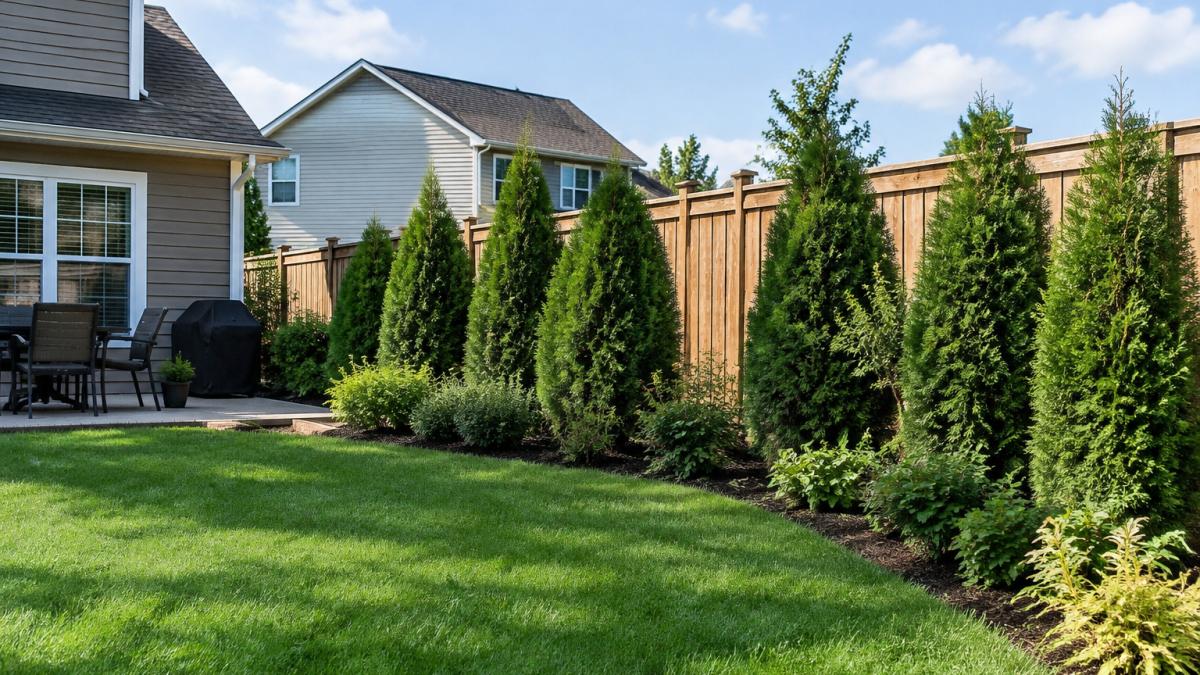
Suburban yard privacy with plants works best as layers, not a single row. A tall evergreen row blocks the view, a mid-height shrub layer fills gaps, and low plantings hide the base.
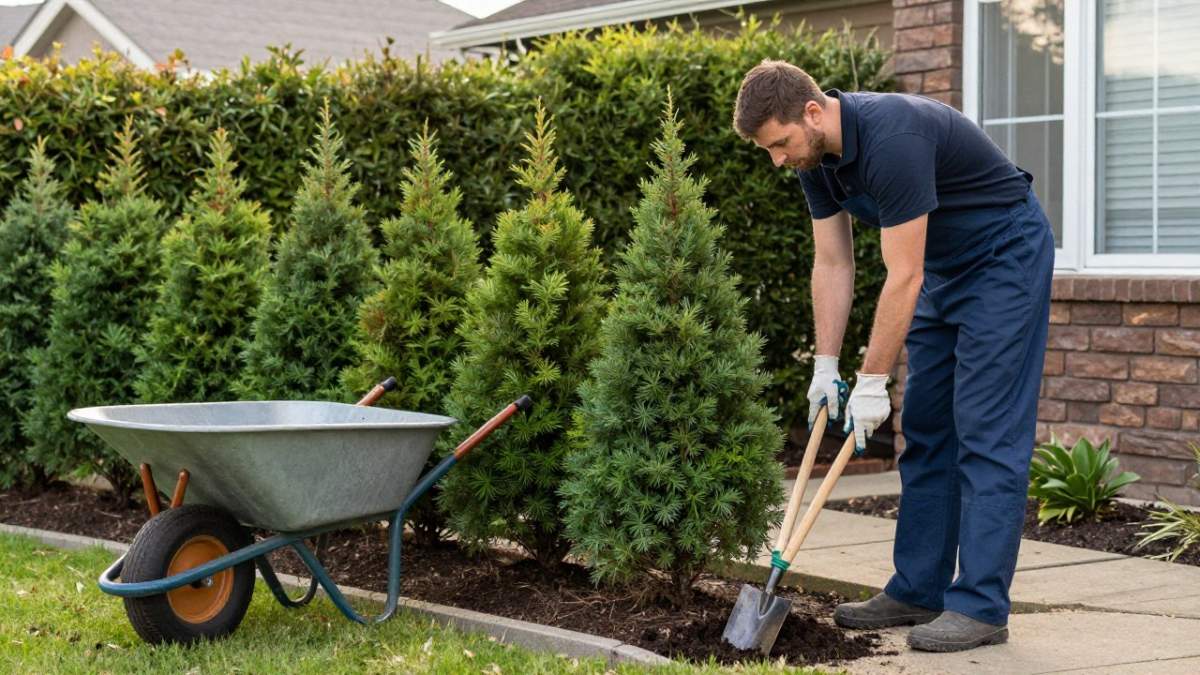
Start with the tallest evergreen shrubs your zone supports, then add a second row offset by a few feet. Offset rows close gaps that a straight line leaves open.
For small yards, plan the planting depth carefully. Our guide to landscape design for small residential yards covers layout and spacing in more detail.
Backyard Privacy Without a Fence: Screens, Pergolas, and Green Walls
Backyard privacy without a fence comes down to three options: freestanding screens, overhead structures, and vertical gardens. Each blocks a different kind of sightline, so pick by what you're actually trying to hide.
- Freestanding screens: slat walls and lattice panels on posts. Fast, movable, and good for patios.
- Pergolas: overhead structures that block second-story views while keeping ground-level light.
- Green walls: trellis and vertical garden systems covered in climbing plants.
A slat wall with tight spacing blocks more than a loose lattice. For a quick fix, outdoor curtains on a pergola frame create an instant outdoor room.
Many homeowners pair a screen with a trellis behind it. The screen does the work now, and the plants take over in a few seasons.
Each fence-free option blocks a different kind of sightline, so pick by what you're trying to hide.
| Option | Best for | Key difference |
|---|---|---|
| Freestanding screens | Patios | Slat walls and lattice panels on posts; fast and movable |
| Pergolas | Second-story views | Overhead structure blocks views while keeping ground-level light |
| Green walls | Vertical coverage | Trellis and vertical garden systems covered in climbing plants |
| Outdoor curtains | Instant privacy | Hung on a pergola frame to create an instant outdoor room |
Tall Backyard Privacy Ideas That Actually Block Second-Story Views
Tall backyard privacy ideas fail for one reason: height without density. A tall thin tree lets your neighbor see straight through. What blocks a second-story window is foliage density at the right height, not just a tall trunk.
The fix is a two-part approach. Plant tall evergreens for year-round height, then add an overhead structure or tall screen where the sightline is worst.
According to Deerbusters' backyard privacy study, half of surveyed homeowners said fencing creates more privacy in their yard, and nearly as many said tall, solid privacy fences provide the best privacy.
Skip fast-growing trees that drop limbs. A windbreak of sturdy evergreens beats a quick fix that fails in a storm.
Backyard Privacy Ideas on a Budget: Where to Save and Where to Spend
Backyard privacy ideas on a budget work when you spend on structure and save on plants. Structure lasts decades. Plants can be sized up over time, and smaller stock costs far less.
Where to save:
- Buy smaller shrubs and let them grow
- Use trellis and climbing plants instead of a full hedge
- Add outdoor curtains to an existing structure
- Group pots and tall ornamental grasses to block low sightlines
Where to spend:
- Posts, footings, and hardware that hold the screen
- One solid screen panel at the worst sightline
- Quality soil prep so plants establish fast
A buffer zone of dense ornamental grasses costs little and fills gaps in one season. Save the big spend for the one sightline that bothers you most.
Climate and Noise: Choosing Plants and Barriers That Work in Your Zone
Climate decides which plants survive, and noise decides which barrier type helps. Most privacy guides list evergreens without asking whether they will live in your yard, and almost none treat sound as a design problem. Both change the answer.
Match plants to your hardiness zone, not to a photo
The USDA Plant Hardiness Zone Map is the standard reference for winter cold tolerance (USDA Unveils Updated Plant Hardiness Zone Map : USDA ARS). Suburban yards span a wide range of zones, so a species that thrives in one region can die back to the ground in another.
Three climate factors decide whether a privacy planting fills in or thins out:
- Cold tolerance: A plant rated one zone warmer than yours may survive a mild winter and die in a cold one. Choose species rated at least one zone colder than your location for margin.
- Drought and heat: In drier regions, drought-tolerant evergreens such as juniper, arborvitae varieties bred for dry climates, and certain pines hold foliage better than thirsty species. A hedge that stresses in summer drops inner needles and blocks nothing.
- Light and soil: Shade tolerance matters under existing trees, and drainage matters more than most homeowners expect. Evergreens in poorly drained clay yellow out and thin. Amend soil and plant on a slight mound where water pools.
A common pattern is to pick the fastest-growing evergreen on a list and plant it everywhere. Fast growth often comes with weak wood, pest susceptibility, or aggressive roots. A slower, sturdier species that fills in over three seasons usually outperforms a fast grower that fails in a storm or a drought.
Design for density at the sightline height
What blocks a second-story window is foliage density at the height of the sightline, not the height of the trunk. A tall, thin tree lets a neighbor see straight through the crown. Choose plants that hold dense foliage low on the plant, and layer a mid-height shrub row in front of the tall row to close gaps at eye level.
For narrow side yards, columnar evergreens give height without spreading into the walkway. For wide buffers, a two-row offset planting closes gaps that a single straight row leaves open. Space plants by their mature spread, not their nursery-pot size, or the hedge will crowd itself out within a few years.
Treat noise as a separate problem from sight
A barrier that blocks a view does not automatically block sound. Sound behaves differently from light: it diffracts over and around barriers, and low frequencies pass through most materials.
- Density beats height for noise. A solid fence or a thick, multi-row evergreen planting reduces neighbor and traffic noise better than a sparse tall tree. A hedge with gaps lets sound through the gaps.
- Mass and decoupling matter. A heavy, solid barrier with no gaps performs better than a light panel that vibrates. Foliage absorbs some high-frequency sound, while hard surfaces such as stone walls and concrete reflect it.
- Distance and layering help. Moving the barrier closer to the noise source, and layering soft planting behind a solid barrier, reduces the sound that reaches your seating area.
Windbreak plantings do double duty here. A dense evergreen row blocks wind, cuts noise, and adds privacy in one planting, which is why it is a common choice along the noisiest property line.
Put climate and noise together in the plan
Choose the barrier for the noise problem and the plant for the climate problem, then check that they work together. A solid fence handles the worst noise and sightline, a climate-appropriate evergreen row adds height and softens the barrier, and a low planting of ornamental grasses fills the base and absorbs some ground-level sound. Confirm zone ratings and drainage before you buy, and the planting will fill in rather than fail.
DIY vs. Professional Installation: What Each Option Really Costs You
DIY vs. professional installation is a trade between time and risk. DIY saves on labor but puts the layout, digging, and plant choice on you.
Use this checklist to decide:
- Can you dig and set posts yourself?
- Do you know your zone and soil type?
- Have you confirmed HOA and zoning limits?
- Can you plant at the right depth and spacing?
- Will you maintain it for the first two years?
If you checked fewer than three, hire it out. A poorly spaced hedge or a fence on the wrong line costs more to fix than to install right.
Pricing depends on yard size, materials, and plant sizes. Request a free estimate for current numbers.
Privacy in a suburban yard comes down to planning before buying. Map your sightlines, check the rules, then layer plants and structure to match.
Get started with QEN Landscaping and request a free estimate for your suburban yard privacy plan.
Frequently Asked Questions
How can I block my neighbor's view from my yard?
The most effective approach is layered screening along the property line. A privacy fence or slat wall blocks ground-level sightlines, while fast-growing hedges and evergreen shrubs fill gaps above the fence line. For second-story views, add tall backyard privacy ideas such as columnar trees, a pergola with outdoor curtains, or a trellis covered in climbing vines. Walk your yard at different times of day to map exactly where the sightlines fall, then match the barrier height to each spot.
What is the cheapest way to add privacy to my backyard?
Backyard privacy ideas on a budget usually start with plants. A row of fast-growing shrubs costs far less than a built structure and improves curb appeal over time. Ornamental grasses and bamboo fencing are other low-cost options. If you need instant screening, a freestanding privacy screen or trellis with vines costs less than a full fence. Keep in mind that cheap materials may need replacing sooner, so compare the long-term cost, not just the upfront price.
How tall should a backyard privacy screen be?
Height depends on what you are blocking. A 6-foot fence or hedge handles most ground-level sightlines between neighboring yards. If a neighbor has a second-story window or a raised deck, you may need 8 to 12 feet of screening, which usually means tall shrubs or trees rather than a fence. Check your local zoning code and HOA rules first, since many areas cap fence heights and some restrict tall plantings near property lines.
Can I create backyard privacy without a fence?
Yes. Backyard privacy without a fence can come from layered planting, a pergola with outdoor curtains, a slat wall, a vertical garden, or a trellis covered in vines. Each option blocks sightlines differently and fits different budgets. Plants take time to fill in, while built screens give instant results. Many yards combine both: a fast evergreen hedge for long-term coverage and a freestanding screen for the first few seasons while the plants establish.