 How-to
Are You Hiring the Right Landscaper? Ask These Questions
Last Updated: October 27, 2026
Quick Summary
Before hiring landscapers, write down a specific scope and budget range, then ask each contractor about insurance, licensing, and supervision. Compare quotes only when they cover the same scope, materials, and exclusions. Get the final terms, payment milestones, and change-order process in a signed written contract.
- Hire a professional for grading, drainage, large trees, hardscaping, or irrigation installation.
- Give every contractor the same photos, measurements, and written scope so quotes are comparable.
- Ask whether they carry liability insurance and workers' compensation, and whether they are licensed for your work.
- Read each bid's exclusions, since missing items like debris hauling can make a lower price higher.
- Tie payments to completed milestones and get change orders approved in writing before work proceeds.
Table of Contents
- When to Hire a Professional Landscaper Instead of Doing It Yourself
- Defining Your Project Goals, Scope and Budget Before You Call
- Landscape Designer vs. Landscaper: Which Do You Need?
- Questions to Ask a Landscaping Contractor Before You Hire
- How to Compare Landscaping Quotes Side by Side
- Checking References, Insurance and Licensing
- Landscaping Contract Checklist: Terms, Deposits and Payment Safeguards
- Booking Your First Consultation With QEN Landscaping
- Frequently Asked Questions
Hiring landscapers can feel like a gamble, especially when three quotes come back with three very different prices. The good news is that the right questions, asked before you sign anything, can help you evaluate landscaping contractors. This guide walks you through tips for hiring professional landscapers, from deciding whether to hire at all to reviewing a contract.
When to Hire a Professional Landscaper Instead of Doing It Yourself
Some yard work is fine as a weekend project. Mowing, raking leaves, and planting a few annuals are easy to handle alone. Other jobs call for a crew.
Hire a professional when the work involves grading, drainage, large trees, hardscaping, or heavy machinery. Mistakes in these areas can damage your home's foundation or create standing water that is expensive to fix later.
- Drainage problems that cause pooling after rain
- Tree work near power lines or the house
- Patios, walkways, and retaining walls
- Irrigation system installation
- Large-scale cleanups that need a trailer and equipment
Defining Your Project Goals, Scope and Budget Before You Call
Before you contact any of the hiring landscapers on your list, write down what you want. Be specific. "Make the backyard nicer" gives a contractor very little to price. "Add a 12-by-16-foot patio and a drip irrigation line for the garden beds" gives them a clear scope.
Note the size of your property, the condition of your lawn and soil, and which areas get the most sun or shade. Take photos from several angles. These details help every contractor quote the same project.
Set a realistic budget range as well. Tell contractors what you can spend. A good company will say whether that range fits the scope or suggest ways to phase the work.
Landscape Designer vs. Landscaper: Which Do You Need?
People often use these two titles interchangeably, but the roles differ. A landscape designer creates the plan: layout, plant selection, and how the space will look and function. A landscaper carries out the physical work, such as grading, planting, and installing hardscape features.
Some firms do both. If your project involves a major redesign, a designer can build the plan first. For basic maintenance or a simple planting job, a landscaper alone may be enough. You can learn more about landscape design in our landscape design guide for small residential yards.
Questions to Ask a Landscaping Contractor Before You Hire
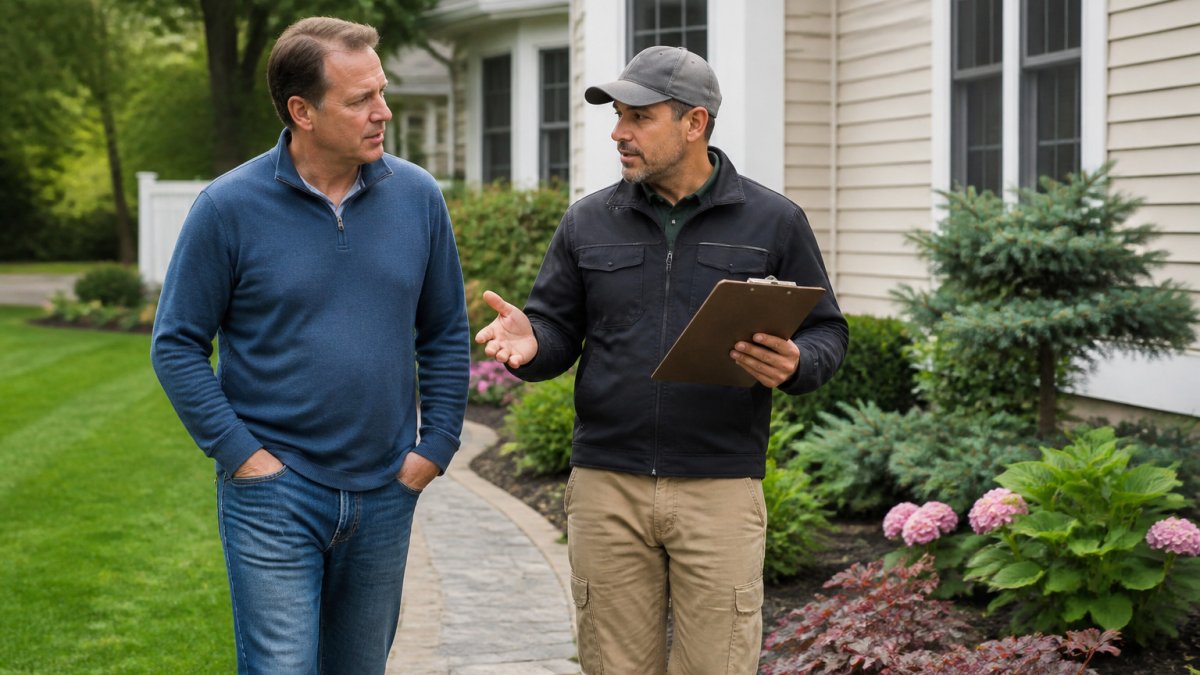
Ask direct questions and pay attention to how clearly each contractor answers. Useful questions include:
- How long have you been in business?
- Do you carry liability insurance and workers' compensation?
- Are you licensed for the work I need done?
- Who will be on my site, and will you supervise the crew?
- How do you handle changes to the scope once work starts?
- How often will someone be on site, and how do you communicate updates?
Vague answers are a warning sign. Ask contractors to put key promises in writing.
How to Compare Landscaping Quotes Side by Side
Quotes only help if they cover the same work. Two bids can look far apart simply because one includes soil preparation, permits, and cleanup while the other leaves them out. The goal is not to find the lowest number, it is to find the bid that prices the same scope most completely and fairly.
Start by asking every contractor to quote from the same written scope. Send each one your photos, measurements, and a short list of must-haves. If a contractor insists on quoting a different scope, note why, sometimes they see a drainage issue you missed, and that is useful information.
Normalize the bids before you compare price
Line up each proposal against the same categories so nothing hides in the fine print:
| Item | Bid A | Bid B | Bid C |
|---|---|---|---|
| Scope of work described | |||
| Materials listed by brand, type, and quantity | |||
| Labor hours or crew size | |||
| Site cleanup and debris disposal | |||
| Permits or utility locates | |||
| Soil prep, grading, and drainage work | |||
| Irrigation or lighting (included or excluded) | |||
| Warranty or aftercare terms | |||
| Payment schedule and deposit | |||
| Total price |
Fill this in for every bid. Any blank cell is a question to ask, not a reason to assume the work is included.
Read the exclusions as carefully as the inclusions
Most bids have an exclusions line, and it is where budgets go sideways. Common exclusions include:
- Hauling away old concrete, roots, or soil
- Repairing irrigation lines cut during excavation
- Permits and utility locating fees
- Replacing poor soil or correcting grading
- Plant replacement if something dies in the first season
If one bid excludes three items another bid includes, the lower price is not really lower. Ask each contractor to price the missing items as add-ons so you can compare apples to apples.
Weigh value, not just the bottom line
A bid much higher or lower than the others deserves a closer look. A very low or high bid deserves a closer look. Ask what is included and compare the scope and terms.
Ask yourself:
- Does the bid specify plant sizes (for example, 3-gallon containers versus 1-gallon)?
- Is the hardscape base material and compaction method described?
- Does the warranty cover labor, plants, or both, and for how long?
- Is the payment schedule tied to milestones or front-loaded?
According to the University of Wisconsin-Madison Division of Extension, estimates should be compared based on identical scopes, materials, and services, and bids much higher or lower than the others deserve a closer look (Hiring a Landscape Professional: A Homeowner’s Guide for Wisconsin). Finding the Right Landscape Professional for You offers guidance on this.
Once the bids are normalized, rank them on three things: completeness of scope, clarity of materials and methods, and contract terms. Price is the tiebreaker, not the starting point.
Checking References, Insurance and Licensing
Ask for references from projects similar to yours. Call them and ask about their experience.
Ask contractors about any insurance and licensing relevant to your project.
If available, review photos of past work.
Landscaping Contract Checklist: Terms, Deposits and Payment Safeguards
A written contract can document the agreed terms, including money, changes, and delays.
What every landscaping contract should include
- A detailed scope of work matching the quote, including plant sizes and material types
- Start and completion dates, plus what happens if weather or supplier delays occur
- Payment schedule tied to completed milestones, not calendar dates
- Deposit amount and what it covers
- Who pays for permits, utility locates, and debris removal
- Warranty terms for plants, hardscape, and workmanship, with claim deadlines
- How change orders are priced and approved in writing
- A process for resolving disputes, including notice requirements
- Insurance and license numbers listed in the agreement
Deposits and payment milestones
Review the proposed payment terms before agreeing to them.
- Deposit at signing to reserve the schedule and order materials
- Payment when demolition or site prep is complete
- Payment when hardscape or major planting is installed
- Final payment after a walkthrough and punch-list completion
Ask what happens to your deposit if the project is delayed or canceled. Get the answer in writing.
Change orders: how scope creep gets priced
If the project scope changes, the contract can state how those changes are handled:
- Changes are priced in writing before work proceeds
- You approve the change order in writing (email is fine if the contract allows it)
- The change order states the cost and any schedule impact
Red flags to watch for
- Large upfront payment requests with no milestone schedule
- No written contract, or a one-page contract with no scope detail
- Warranty terms that are vague or verbal only
- Pressure to sign on the spot or to skip the permit process
- Requests to pay a crew member directly rather than the company
Keep a paper trail
Keep copies of the signed contract, change orders, invoices, and photos of the site before, during, and after work. If a disagreement arises, a clear record can help document what the contract and change orders say.
Booking Your First Consultation With QEN Landscaping
Once you have your goals, budget, and questions ready, the next step is a conversation. QEN Landscaping has over 15 years of experience serving residential and commercial clients, with communication throughout the job. You can learn more about our professional lawn maintenance services in New Jersey before you reach out.
Request a free estimate and bring your photos, scope notes, and questions.
Frequently Asked Questions
What should I look for when hiring a professional landscaper?
Ask about the contractor's experience with projects like yours, the scope of work, and how communication will work during the job. Request that agreed terms be put in writing.
How do I compare landscaping estimates?
Compare estimates for the same scope and review the listed materials, cleanup, and terms. Ask contractors to clarify any differences or unclear items.
Should I hire a landscape designer or a landscaping contractor?
A landscape designer focuses on planning, while a landscaping contractor focuses on carrying out landscaping work. Ask prospective contractors which services they provide and what is included in their estimate.
What should a landscaping contract include?
A contract can document the agreed scope, materials, schedule, payment terms, changes, cleanup, and any warranty terms. Review the terms and keep a copy for your records.